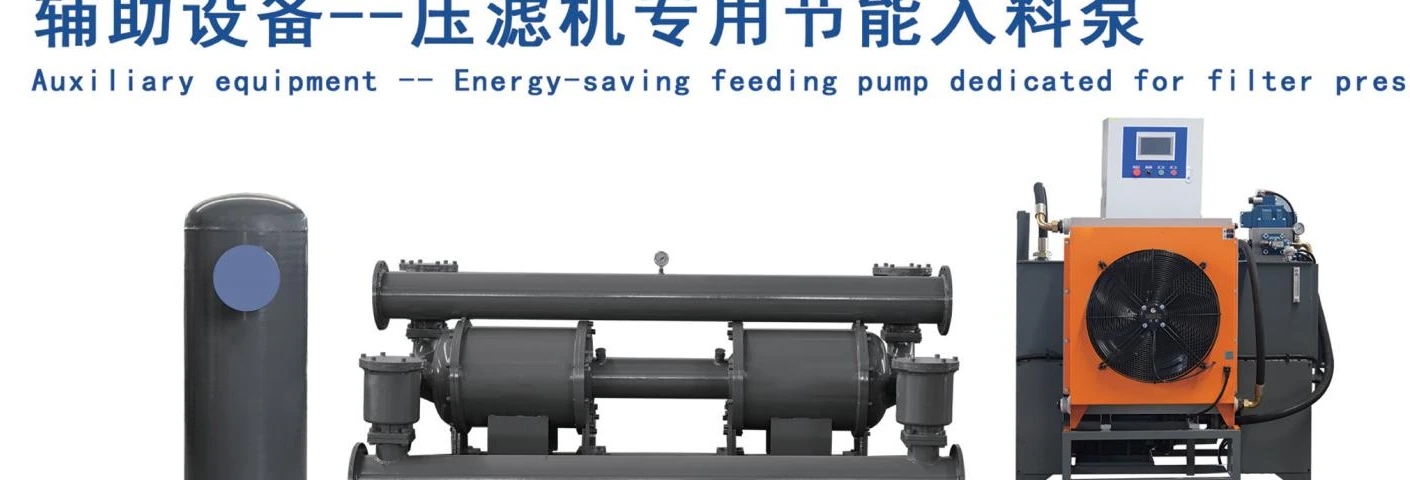
- 01Prepared slurry tank or thickener→
- 02Suction isolation and protection→
- 03Feed pump with agreed control limits→
- 04Discharge pipe, valves and pressure indication→
- 05Filter press feed manifold→
- 06Filtrate outlets to the confirmed downstream destination
The diagram shows physical transfer only. The commissioned control sequence, pressure limits, filtration end condition, interlocks and operator responsibilities must be confirmed for the selected installation. Do not open the press under pressure or service energized equipment.
When to Choose a Filter Press Feed Pump
A dedicated feed pump transfers prepared slurry from a mixing tank, thickener, collection pit or process vessel to the filter press. Selection must account for solids, particle size, viscosity, temperature, pH, abrasion and the changing resistance of the press as chambers fill. A pump is not a substitute for slurry conditioning, suitable pipework or correct press selection.
Pump selection is a system decision. Confirm the feed pressure range, suction conditions, control method and safe limits instead of choosing from a nominal flow figure. An automatic press and a diaphragm pump can be coordinated when signals, pressure limits and sequence are defined; they are not mutually exclusive.
- Choose a pump after defining wet slurry flow, dry-solids basis, temperature, pH and abrasive or fibrous content.
- Check whether the process needs steady feeding, staged feeding, batch transfer or a variable-speed control strategy.
- Separate feed pressure from any membrane squeeze pressure and from hydraulic-closing pressure on the press.
| Decision item | Information to confirm before selection |
|---|---|
| Material | Slurry description, wet volume, dry-solids concentration, particle size, abrasiveness, fibres, temperature and pH |
| Duty | Required transfer stage, operating hours, batch or continuous source, expected cycle pattern and acceptable control method |
| Hydraulics | Suction arrangement, pipe length and diameter, elevation, bends, valves, discharge point and estimated resistance |
| Press interface | Press model or plate size, inlet connection, filtration sequence, pressure instrumentation and interlocks |
| Site | Power supply, ambient conditions, available footprint, drainage, lifting access and maintenance clearance |
How the Feed Pump Works with a Filter Press
The normal path is prepared slurry source → pump suction → pump discharge → filter press feed manifold. Solids remain on the cloth while filtrate leaves through plate drainage channels. The pump operates only within the agreed limits, and the cycle ends according to the commissioned control logic and confirmed process condition.
Before feeding, verify that the press is closed and ready. Start with the suction path open, monitor pressure, flow, leakage and filtrate, then stop, isolate and depressurize before any opening or service work. Follow the equipment manual and site procedure.
- Source tank or thickener → suction isolation and protection → feed pump → discharge isolation and pressure indication → press feed manifold.
- Filtrate outlets remain separate from the slurry circuit; clear filtrate does not by itself prove that downstream water-quality limits are met.
- A bypass, pulsation control, relief arrangement or flush connection is included only when justified by the pump type and site design.
Pump and Interface Components
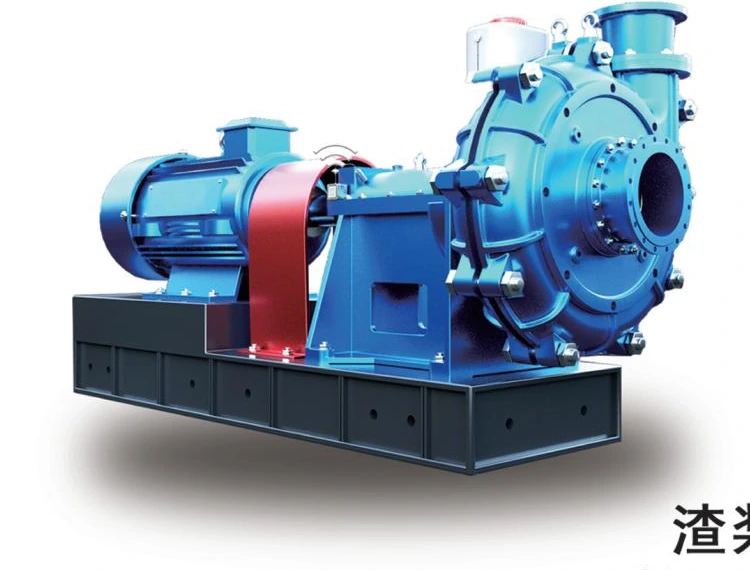
A package may include pump body, drive, mounting, suction and discharge connections, valves, pressure instruments and control interfaces. Materials must follow slurry and cleaning conditions; no wetted construction is assumed without reviewing chemistry, solids and temperature.
Confirm the press inlet size and orientation, flexible connection, gauge location, drain or flush arrangement, and the pump start, stop or speed command. With an automatic press, the pump is one controlled module; operators still inspect the source, alarms and isolation status.
| Interface | Practical check |
|---|---|
| Suction | Keep the line short and supported where possible; confirm submergence, air entry risk, screen or isolation arrangement and clean-out access |
| Discharge | Confirm pipe diameter, elbows, elevation, valves, pressure indication, flexible section and safe drain or flush point |
| Control | Define local or automatic start/stop, speed control, permissives, alarms, emergency stop and signal ownership |
Selection Data and Available Configurations
For a new package or replacement, send the press nameplate, piping sketch, pump data sheet, cycle records and slurry information. The confirmed filter-plate series covers 250–2000 mm, with 1000 mm and 1250 mm examples; exact plate, chamber and inlet compatibility must be confirmed for the selected press.
Configuration depends on abrasive mineral slurry, stone wastewater, sand-washing sludge, tailings or chemical service. Flow, pressure, motor, material, control and delivery details remain quotation-stage confirmation items unless supported by the project record.
- Possible review topics: pump principle, wetted materials, drive arrangement, variable-speed requirement, instrumentation and flushing provision.
- Confirm whether the existing pump is being replaced like-for-like or whether a new duty calculation is required.
- Confirm compatibility with the press feed port, filtration sequence and any diaphragm squeeze or cake-washing stage.
Installation, Commissioning and Maintenance
Before installation, verify support, pipe alignment, valve orientation, electrical isolation, rotation, instruments and maintenance clearance. During commissioning, confirm suction conditions, leak-free connections, permissives, alarms and the relationship between pressure trend and press cycle.
Maintenance begins with safe isolation: stop the process, isolate energy, relieve and drain pressure, and verify zero energy. Check suction blockage or air entry, discharge restriction, vibration, noise, leakage and temperature. Select wear parts from the actual pump identification and slurry service. Cloth washing and cake washing are different tasks.
- Keep a record of pump identification, slurry changes, pressure observations, start/stop events and replacement parts.
- Investigate repeated loss of flow before increasing pressure: check source level, air entry, valves, blockage, wear and control signals.
- Do not remove guards, open a press, or service electrical equipment until the approved isolation and verification steps are complete.
Feed Pump Quote Checklist
Send the pump and press details together. If a field is unknown, state Not Sure rather than inserting an assumed value; Andy can identify what needs a drawing, sample, test or site confirmation before quotation.
| Send this | Why it matters |
|---|---|
| Slurry description and sample information | Establish solids behaviour, abrasion, settling and material compatibility |
| Wet flow and dry-solids basis | Avoid confusing wet feed quantity with dry solids or press capacity |
| Press model, plate size and inlet details | Check the pump-to-press connection and sequence |
| Piping sketch with elevations and valves | Review suction and discharge resistance |
| Power, controls and country | Confirm motor, panel and documentation requirements at quotation stage |
| Photos, drawings and project timing | Clarify the existing installation and next decision step without promising an unconfirmed lead time |
Frequently Asked Questions
Can one feed pump serve every filter press?
No. Slurry behaviour, pipework, press inlet, cycle control and site conditions determine the duty.
Is a diaphragm pump incompatible with an automatic filter press?
No. They can be coordinated when start, stop, pressure limits, alarms and permissives are defined.
Does feed pressure equal membrane squeeze pressure?
No. Feed pressure, membrane squeeze pressure and hydraulic closing pressure are separate values with different functions. Confirm each one for the selected equipment and sequence.
What information should I send for a replacement pump?
Send pump and press nameplates, slurry, wet flow and dry-solids basis, piping, photos, power standard and replacement reason. Mark unknowns Not Sure.
Can you guarantee a fixed flow, pressure or delivery time from the plate size?
No. Plate series alone does not establish flow, pressure, moisture, capacity or delivery time; these require project review.