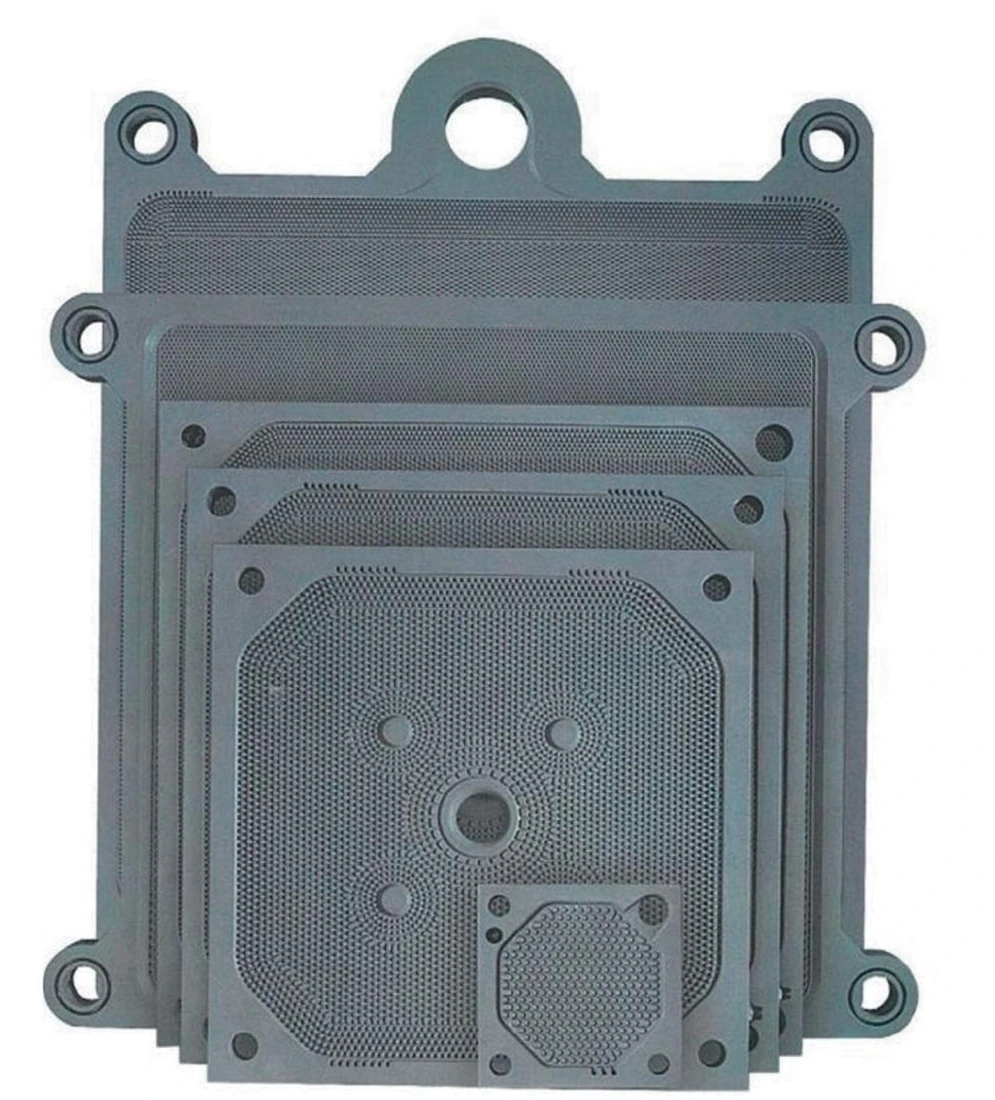
Explore the range
Select recessed filter plates by press fit, chamber depth, port layout, sealing design, material and slurry conditions. Shengqi reviews drawings and samples before supply.
Specify membrane filter plates by press model, dimensions, feed and filtrate ports, membrane interface, material and slurry duty. Shengqi reviews drawings or samples before supply.
Select CGR filter plates by press interface, dimensions, chamber depth, sealing geometry and material. Shengqi reviews drawings, samples and slurry conditions before supplying matched plates.
Match replacement filter plates to your existing press using nameplate details, measurements, port layout, sealing style, material and slurry conditions. Shengqi reviews drawings and samples before supply.
Specify custom filter plates with drawings, samples, dimensions, hole positions, sealing details, material and slurry conditions reviewed before production by Shengqi.
- 01Identify press and plate→
- 02Measure geometry and ports→
- 03Review slurry and operating conditions→
- 04Confirm drawing or sample→
- 05Quote and plan supply
The flow separates identification from selection. A replacement-specification request and a proposed process change may need different material, sealing, cloth, and testing reviews.
Choose the Right Filter Plate
Start with the task the plate must perform. Recessed chamber plates form a filter chamber for general solid–liquid separation. Membrane plates add a flexible membrane stage for a separate squeeze step when the process and plate design support it. CGR plates use a designed sealing and drainage arrangement that must match the press. Replacement plates are matched to an existing machine; custom plates are reviewed from drawings, samples, and measured details.
The confirmed reference range for the digital filter plate series is 250–2000 mm, with 1000 mm and 1250 mm examples. These references do not mean that every press, plate thickness, chamber depth, material, or pressure arrangement is available in every size. Final dimensions and configuration remain selection items to confirm for the specific machine and slurry.
- For a new press: confirm the required plate type, arrangement, feed and filtrate route, cloth installation, and control sequence.
- For a replacement: send the nameplate and clear front, back, side, handle, port, sealing, and connection photos before ordering.
- For an uncertain match: provide one plate or a drawing, plus slurry temperature, pH, solids, and operating history.
- Do not use a plate dimension alone as proof of fit, filtration area, capacity, or performance.
| Project situation | Useful starting point | Confirmation required |
|---|---|---|
| New filter press | Recessed, membrane, or CGR arrangement | Press layout, slurry duty, cloth and port design |
| Existing plate replacement | Replacement filter plate review | Nameplate, measurements, photos, sample or drawing |
| Process change | Custom plate assessment | New slurry data, material compatibility, sealing and test need |
| Unknown plate identity | Measurement guide and quotation review | Complete dimensions, holes, handles, thickness and quantity |
Plate Types and Selection Path
The plate type is only one part of a working plate pack. The filter cloth, feed hole, corner outlets, sealing face, handles, washing or squeeze connections, and the press closing arrangement must work together. A membrane plate is not automatically required because a lower-moisture target is mentioned; the slurry, cycle, membrane material, and separate squeeze conditions need review. Automatic and membrane functions can be combined in one project when the machine and process are designed for both.
Use the following path to reduce ordering errors: identify the press, record the plate geometry, describe the duty, compare the original and proposed installation, and approve a drawing or sample before batch supply. A filtration test may be appropriate where plate choice depends on cake formation, filtrate clarity, washing, or squeeze behavior.
- 1. Identify: machine nameplate, manufacturer mark if present, plate count, and current arrangement.
- 2. Measure: length, width, thickness, chamber depth, handles, holes, sealing profile, and connection positions.
- 3. Describe: slurry solids, particle character, temperature, pH, expected cycle, wash or squeeze steps, and cleaning method.
- 4. Verify: material, drawing, sample fit, cloth installation, and quantity before production.
Send Details for a Plate Review
Andy at Shengqi can review a plate request for a new press or an existing installation. Include the equipment nameplate, a ruler or scale in measurement photos, and both overall and close-up views. State whether the goal is an original-specification replacement or a proposed change; those are different decisions and may require different material, sealing, cloth, and test checks.
For a quotation, provide the plate type if known, dimensions, quantity, required accessories, destination country, and project stage. If a value is not known, write Not Sure rather than estimating it. Contact Andy on WhatsApp at +86 15116183980 or email lkvicky2003@gmail.com.
| Send with the enquiry | Why it matters |
|---|---|
| Nameplate and full plate photos | Links the request to the actual press |
| Length, width, thickness and chamber depth | Checks geometry and chamber relationship |
| Feed, filtrate, squeeze and wash port details | Checks flow and connection compatibility |
| Slurry and operating conditions | Screens material, cloth, sealing and test questions |
| Quantity, destination and timing objective | Supports a complete quotation scope without assuming a delivery date |
Frequently Asked Questions
Can you supply a 1000 mm or 1250 mm filter plate?
Those are confirmed examples within the referenced digital filter plate series. Exact availability, thickness, chamber, holes, material, sealing, and press compatibility must be checked against your machine and duty.
Can I order by length and width only?
No. Length and width are not enough to confirm a safe match. Plate thickness, chamber depth, handles, port positions, sealing face, cloth fitting, material, and press closing arrangement also need review.
Do you supply plates for an existing filter press?
Yes, replacement requests can be reviewed from the nameplate, photos, measurements, drawings, or a sample. A drawing or sample approval is recommended before batch supply.
Is a membrane plate always better than a recessed plate?
Neither is universally better. A membrane plate adds a separate squeeze function that must match the slurry, plate design, membrane material, connections, and operating sequence. Selection should follow the process objective and confirmation data.