- 01Share slurry and site data→
- 02Confirm sample or filtration test needs→
- 03Select plate format, chamber, cloth, pump, and controls→
- 04Review interfaces and safe installation→
- 05Commission, record the cycle, and maintain the pack
Filtration, cake washing, cloth washing, and any separate squeeze operation are different process steps. The final sequence and responsibilities must be confirmed for the selected configuration; this flow does not imply a fixed pressure, capacity, moisture, or cycle time.
When to Choose This Filter Press
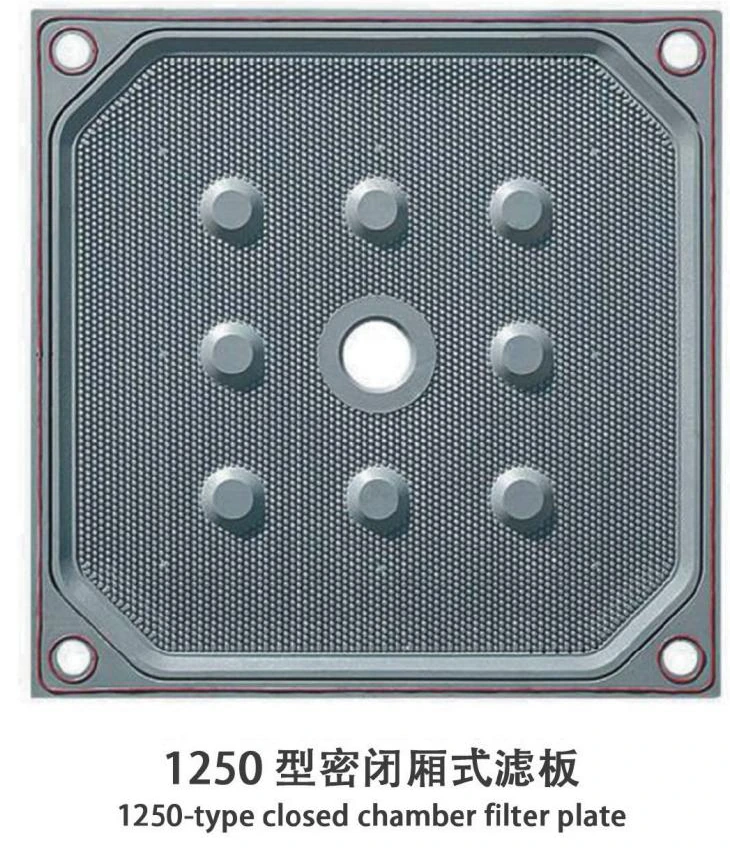
Choose a chamber filter press when batch pressure filtration and a defined filter cake are more useful than continuous separation. The recessed plate geometry creates a chamber on each side of the filter plate. This gives the slurry a contained route through the filter cloth while solids accumulate in a cake that can be released when the cycle is complete.
This format is a practical starting point for mineral slurries, sand-washing sludge, stone wastewater solids, ceramic or kaolin suspensions, and other materials that need a separation test before a final press is selected. It is not a promise that every material will form a releasable cake. Fine particles, compressible solids, sticky solids, temperature, pH, and feed concentration can change the cycle and the cloth choice.
- Batch filtration is acceptable and cake discharge can be scheduled between cycles.
- The process team can define a target for filtrate clarity, cake handling, or solids recovery without treating filtrate clarity as proof of final water compliance.
- The slurry can be characterized by solids concentration, particle behavior, temperature, pH, and chemical compatibility.
- The site can provide safe access for plate opening, cloth inspection, cleaning, and cake removal.
- A laboratory or pilot test is appropriate when cake release, cloth blinding, or wash requirements are uncertain.
| Decision point | Confirm before selection |
|---|---|
| Operating mode | Batch cycle, expected cycles per day, operator involvement, and discharge method |
| Solids behavior | Particle size range, compressibility, stickiness, settling tendency, and dry-solids basis |
| Separation goal | Filtrate clarity, solids capture, cake handling, or recovery objective; do not equate these automatically with regulatory compliance |
| Material compatibility | Slurry temperature, pH, chemical exposure, and wetted-material requirements |
| Evidence needed | Existing cycle records, representative sample, drawings, or a filtration test |
How It Works
A normal chamber filtration cycle has distinct stages. First, the plate pack is closed and compressed by the closing system. The feed pump then sends slurry into the feed channel and into the individual chambers. Liquid travels through the cloth and internal plate drainage paths to the filtrate outlet, while solids remain on the cloth and increase the cake thickness inside each chamber.
As the cake builds, flow resistance changes. The feed pressure, pump behavior, and end-of-cycle decision must be established for the actual slurry and machine design. Feed pressure is not the same as the pressure in a hydraulic closing circuit, and neither should be presented as a membrane squeeze pressure. A chamber press normally relies on filtration through the recessed chambers; any additional operation must be specified as a separate configuration and verified for the equipment.
At the end of the filtration stage, feeding stops and the system is made safe according to its operating procedure. The plate pack opens in the intended sequence and cakes fall or are assisted toward collection. A cloth-washing step, if supplied, is a cleaning operation for the filter cloth. Cake washing is a different process step that sends wash liquid through the cake and may require separate piping and collection. They should not be combined in a default cycle without process confirmation.
- Close and seal the plate pack before feeding.
- Feed the characterized slurry through the feed channel.
- Separate filtrate through cloth and plate drainage passages.
- Stop feed after the confirmed end condition; isolate and depressurize according to the approved procedure.
- Open and discharge only after the machine indicates a safe state.
- Inspect or wash cloths as required, then prepare the pack for the next cycle.
| Stage | What the process team should record |
|---|---|
| Feed | Slurry source, feed duration, pump condition, pressure trend, and sample identity |
| Filtration | Filtrate appearance, flow change, cake formation, and any leakage |
| Discharge | Cake release, sticking locations, discharge time, and material retained on cloth |
| Cleaning | Cloth condition, cleaning method approved for the material, and any damaged plates or seals |
Main Components
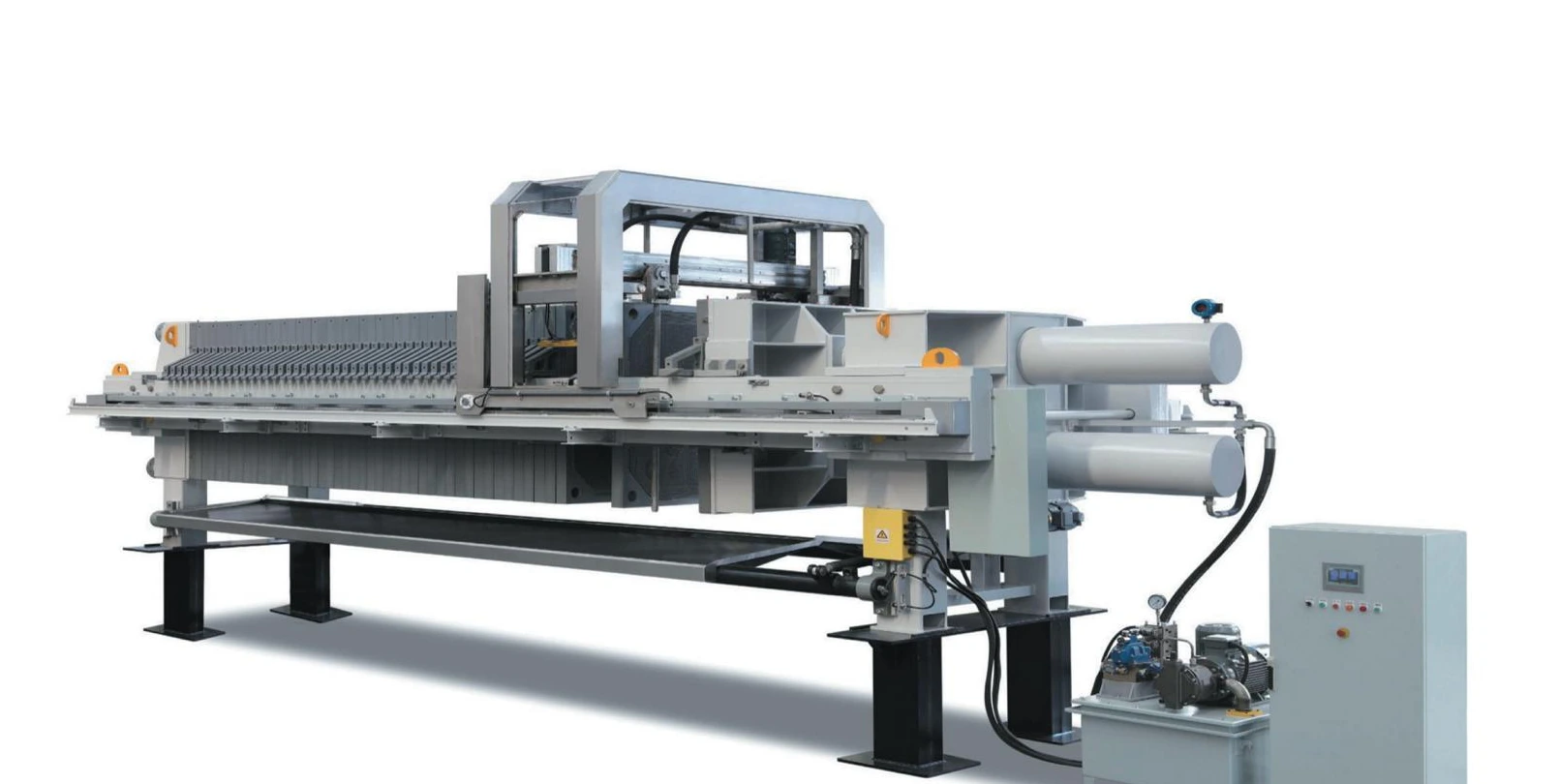
A frame or side support carries the plate pack and provides the travel path for opening and closing. A closing system applies the force needed to keep the pack sealed during the specified operation. The feed pump and process pipework deliver slurry and collect filtrate, while valves, gauges, drains, and protective devices support controlled operation. An automatic plate-shifting or cloth-washing arrangement may be added where the duty and site controls justify it.
For an accurate quotation, identify every interface that affects replacement or integration: plate dimensions, chamber depth, handle arrangement, hole pattern, sealing profile, cloth attachment, feed connection, filtrate outlet, and material of construction. Product photographs can show general equipment and configuration examples, but they do not prove a particular model's pressure, capacity, or performance.
- Recessed filter plates and matched filter cloths
- Plate pack support, side beams or frame, and plate handles
- Closing system and safety interlocks or guards where specified
- Feed manifold, filtrate outlets, valves, gauges, and drains
- Feed pump, cake collection arrangement, and optional plate-shifting or cloth-washing equipment
- Control panel or local controls when automation is included in the confirmed scope
Technical Specifications
Filter area, chamber volume, wet feed mass, dry-solids mass, filtrate flow, cycle time, and daily throughput are different measures. They must be reported with their basis and units. No fixed pressure, production rate, cake moisture, service life, energy saving, delivery time, or guaranteed capacity should be inferred until the model, material, test conditions, and complete configuration are confirmed.
| Specification item | Selection basis or confirmation required |
|---|---|
| Plate format | Confirm a suitable format within the discussed 250–2000 mm digital series; verify the actual model |
| Example format | 1000 mm or 1250 mm may be reviewed as examples, not universal performance commitments |
| Filter area and chamber volume | Calculate from the selected plate, chamber depth, number of plates, and effective filtration surfaces |
| Pressure | Separate feed pressure, any specified squeeze pressure, and hydraulic closing-system pressure; confirm allowable values for the selected equipment |
| Wetted materials | Confirm plate, cloth, seals, pipe, valve, and pump materials against pH, temperature, and chemicals |
| Automation | Define sensors, interlocks, plate movement, alarms, operator actions, and the boundary of manual work |
| Performance | Confirm by representative slurry data or testing; do not assume capacity, moisture, clarity, or cycle time |
Available Configurations
The chamber press can be configured around the discharge method, plate handling, cloth attachment, feed arrangement, and control boundary. A manually operated arrangement may suit a small or closely supervised duty. A more automated arrangement can coordinate plate movement, cycle signals, alarms, and selected cleaning tasks, but automation does not remove the need for trained operators to verify slurry condition, safe isolation, cloth condition, and cake discharge.
| Configuration question | Practical choice |
|---|---|
| Plate handling | Manual opening, assisted movement, or automatic shifting according to pack size, labor, and discharge needs |
| Cloth attachment | Select a compatible attachment and sealing arrangement; confirm replacement dimensions from a sample or drawing |
| Filtrate collection | Open or closed outlets, separate streams, drains, and sampling points based on the liquid handling plan |
| Cake handling | Direct collection, conveyor, breaker, or another confirmed downstream arrangement |
| Controls | Local controls, interlocks, alarms, and manual confirmation points defined in an operating sequence |
Slurry Data Needed for Selection
State wet feed quantity and dry-solids quantity separately, with units and the time basis. Include whether the stated quantity is per batch, per hour, or per day. Describe whether the target is a transportable cake, recovered product, clarified filtrate, reduced sludge volume, or another objective. If the filtrate must meet a discharge or reuse requirement, provide that requirement separately; a press's visible filtrate clarity is not by itself proof of regulatory compliance.
| Data group | Useful details to provide |
|---|---|
| Material | Origin, solids type, particle size or grading, density if known, abrasiveness, and stickiness |
| Concentration | Wet slurry concentration, dry-solids basis, density, and expected variation |
| Chemistry | pH, temperature range, corrosive or solvent exposure, and any incompatible materials |
| Duty | Batch or continuous upstream supply, hours per day, cycles expected, and seasonal changes |
| Cake and filtrate | Handling objective, washing need, separate liquid streams, sampling, and disposal or reuse constraints |
| Evidence | Photos, drawings, previous cloth and plate details, sample availability, and test records |
Installation Requirements
Provide feed, filtrate, drain, and any wash connections with isolation and routing that match the approved process schematic. Check pipe supports so that external forces are not transferred into plate ports. Confirm pump location, suction conditions, electrical supply, control-panel location, compressed air or water needs if applicable, and the destination for cakes and filtrate. Site utilities and interfaces should be signed off before shipment or installation.
Commissioning should verify rotation or control logic, valve positions, instrument indication, interlocks, leak-free connections, and a controlled water or process test as appropriate. Operators need procedures for start-up, end-of-cycle confirmation, isolation, cleaning, and abnormal conditions. Never open a press under pressure, perform electrical work while energized, or bypass a safety interlock.
- Approved general arrangement, foundation, access, lifting, and drainage plan
- Confirmed feed, filtrate, wash, drain, electrical, and control interfaces
- Safe cake collection and a route for cloth and plate maintenance
- Site responsibility matrix for utilities, installation, commissioning, training, and operation
- Lockout, isolation, depressurization, and interlock procedures available before operation
Maintenance & Replacement Parts
Cloth washing is not the same as cake washing. Use only a cleaning method approved for the cloth, plate, seals, and process residue after material compatibility has been reviewed. Do not apply a generic chemical recipe. If a plate or cloth must be replaced, use the nameplate, clear front and back photographs, side and handle details, and measured dimensions to confirm the match. The measurement guide can help organize the information before an inquiry.
Replacement plates require confirmation of length, width, thickness, chamber depth, hole positions, sealing profile, handles, pull arrangement, pressing or feed interfaces, material, and operating conditions. Replacement cloths require the plate and cloth installation style, center or corner holes, neck and edge construction, attachment and stitching, original sample, and the intended improvement or like-for-like objective. Do not force mismatched plates, cloths, seals, or ports into a pack.
| Observation | Safe next action |
|---|---|
| Leakage at plate edges or ports | Stop according to the operating procedure, isolate and depressurize, then inspect alignment, cloth seating, seals, and damage |
| Cake remains on cloth | Record location and material behavior; inspect cloth, chamber filling, cycle conditions, and discharge assistance after safe isolation |
| Flow falls early | Check slurry change, cloth blinding, feed path, and filtrate route; test before changing chemistry |
| Damaged plate or cloth | Remove from service when safe and send identification photos, measurements, material, and operating history for review |
| Controls or interlock fault | Keep the equipment isolated and use qualified service personnel; never bypass the interlock |
Frequently Asked Questions
What is the difference between a chamber filter press and a membrane filter press?
A chamber press forms recessed chambers and filters through cloth as solids build into the cake. A membrane press adds a separate flexible-membrane squeeze stage after filling and filtration. Automation can be applied to either structure, so automatic operation and membrane squeezing should be evaluated as separate decisions.
Can you select a machine from the slurry name alone?
No. Provide concentration, wet and dry solids basis, particle behavior, pH, temperature, duty, cake objective, filtrate requirement, and site utilities. A representative sample or filtration test may be needed before confirming plate count, chamber depth, cloth, pump, and cycle expectations.
What plate sizes can be discussed?
Shengqi can discuss digital filter plate series in the 250–2000 mm range. The 1000 mm and 1250 mm formats are examples for selection discussions, not a statement that every model or configuration is available at every size. The actual format and performance require model and process confirmation.
Does a larger filter area guarantee higher production?
No. Filter area is a geometric separation measure. Throughput also depends on chamber volume, solids loading, compressibility, resistance, cloth, feed conditions, cycle control, discharge time, and the basis used for reporting wet or dry material.
Can the press wash the cake?
Cake washing can be designed when the material, wash liquid, collection streams, and process objective justify it. It is different from washing the filter cloth, and the required piping and sequence must be confirmed rather than assumed as a standard chamber cycle.
What information should I send for a quotation?
Send the material name and source, slurry concentration, wet and dry quantity with units and time basis, pH, temperature, operating hours, cake and filtrate objectives, available utilities, country, site limits, photos or drawings, and whether a sample or test is available. Andy can use this information to coordinate the next selection step.
How do I order replacement plates or cloths for an existing press?
Send the equipment nameplate, front, back, side, handle, hole, sealing, and interface photographs, plus measured length, width, thickness, chamber depth, material, quantity, and operating conditions. For cloths, include the original cloth or its center and corner hole, neck, edge, attachment, and stitching details.
What are the basic safety boundaries during maintenance?
Do not open the plate pack under pressure, do not work on energized electrical equipment, and do not bypass guards or interlocks. Follow the approved isolation, depressurization, lockout, and qualified-service procedures before inspection or repair.