- 01Tailings source and sample→
- 02Measure slurry and solids data→
- 03Confirm testing needs→
- 04Review press, plate, cloth and feed interfaces→
- 05Define cake, filtrate and installation responsibilities
This is a selection workflow, not a guaranteed performance cycle. Feed, filtration, membrane pressing, cloth washing and cake washing must be specified as separate operations where applicable.
When Tailings Dewatering Is a Fit
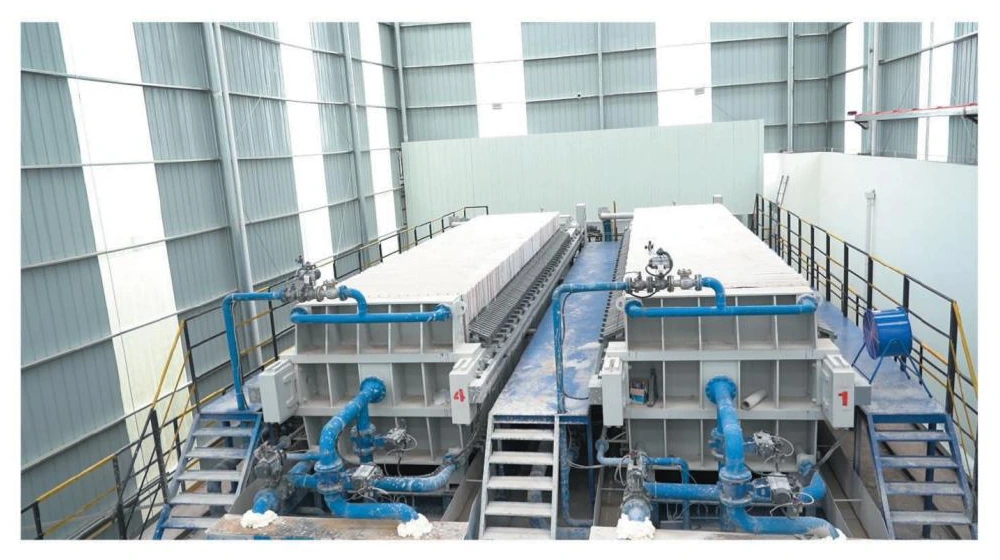
A filter press can separate water from mineral tailings after process recovery, thickening or slurry collection. It is considered when the site needs a stackable or transportable filter cake, improved water recovery, or a defined solids-discharge step. The press does not replace thickening, water-quality treatment, dry stacking design or thermal drying; those duties must be assigned separately.
- Define whether the objective is water recovery, cake transport, storage, reuse or a combination.
| Decision point | Information to confirm before selection |
|---|---|
| Feed source | Thickener underflow, pond recovery, process stream or another source; include sampling point. |
| Solids | Dry-solids concentration, particle-size distribution, mineralogy and abrasive character. |
Selection and Test Sequence
Start with representative slurry rather than selecting a press from the mine name alone. Shengqi can review the process description and available sample information, then identify whether bench or slurry filtration testing should precede equipment sizing. Testing may compare cloth retention, cake formation, filtrate clarity, washing needs and release behavior under stated conditions. Results remain tied to the sample and test method; they are not a blanket guarantee for every operating change.
- 1. Describe the tailings source, upstream separation and downstream cake route.
Tailings Data Needed for a Review
Send the most recent data and identify how each value was measured. If a value is unknown, mark it as Not Sure rather than filling in an assumption. A sample description should include collection date, storage conditions, preservation method and whether the material represents normal or upset operation. This helps distinguish a selection gap from a process change.
| Data field | Useful submission detail |
|---|---|
| Flow or batch basis | Wet slurry rate and dry-solids rate, each with unit, peak or average basis. |
| Solids and particles | Percent solids, particle-size distribution, density if available and abrasive observations. |
Practical Boundaries and Safety
Installation planning should assign responsibility for civil support, feed and filtrate pipework, electrical supply, controls, drainage, ventilation, lifting access and cake removal. The site must provide safe access for inspection and cleaning. Operators should follow the supplied operating procedure and confirmed interlocks. Never open a press while it is under pressure, never perform electrical work while energized, and never bypass an interlock to continue a cycle.
- Lock out and isolate the relevant energy sources before maintenance or inspection.
Request a Tailings Selection Review
Submit the tailings description, measured data, drawings and photographs through the project enquiry route. Include your country, contact details, target outcome, operating schedule and any existing press information. Andy can coordinate the first review for Shandong Shengqi Environmental Protection Equipment Co., Ltd. at WhatsApp +86 15116183980 or lkvicky2003@gmail.com.
- Attach a process flow diagram or a clear sketch of the existing arrangement.
Frequently Asked Questions
Can a filter press be selected from the tailings name alone?
No. Tailings vary by particle size, solids concentration, mineralogy, chemistry and upstream process. A selection requires measured slurry data, the cake and filtrate objectives, site interfaces and, where appropriate, filtration testing.
Which filter plate size should a tailings project use?
The confirmed Shengqi discussion range is 250–2000 mm, with 1000 mm and 1250 mm examples. The correct size and model must be confirmed from slurry behavior, cycle requirements, layout, utilities and the selected plate and cloth arrangement.