Explore the range
Understand membrane squeezing, plate configuration, slurry data, installation needs and replacement parts before selecting a membrane filter press from Shengqi.
Select a chamber filter press by slurry behavior, filter area, chamber depth, plate format, filtration cycle, utilities, and discharge requirements. Shengqi reviews your process data before confirming a configuration.
Select a plate and frame filter press for batch solid-liquid separation with clear frame construction, configurable cloths, and slurry-led engineering review from Shengqi.
Specify an automatic filter press around your slurry, cycle tasks, operator boundaries, utilities, and unloading needs. Shengqi provides configurable equipment and practical selection guidance.
Understand fast-opening filter press unloading, suitable slurry conditions, configuration choices, installation needs and the data Shengqi needs to confirm a model.
Specify a cake washing filter press for controlled displacement washing, separate filtrate collection, and application-led solids recovery. Share slurry data with Shengqi for equipment selection.
Select a mobile filter press around transport, slurry, utilities, access and discharge needs. Shengqi helps confirm the press, plates, cloths and site interfaces.
A laboratory filter press for controlled slurry trials, filter cloth checks and scale-up decisions. Share your sample, test objective and operating data with Shengqi for a traceable equipment discussion.
- 01Share slurry and solids data→
- 02Confirm separation objective and test need→
- 03Review press, plates, cloth, pump, and site interfaces→
- 04Confirm configuration and quotation scope→
- 05Plan installation, commissioning, and operator checks
Feeding, filtration, optional membrane pressing, cake discharge, cake washing, and cloth cleaning are distinct operations. The final sequence is defined for the selected process; this flow does not imply that all steps run in every cycle.
Choose a Filter Press by the Separation Task
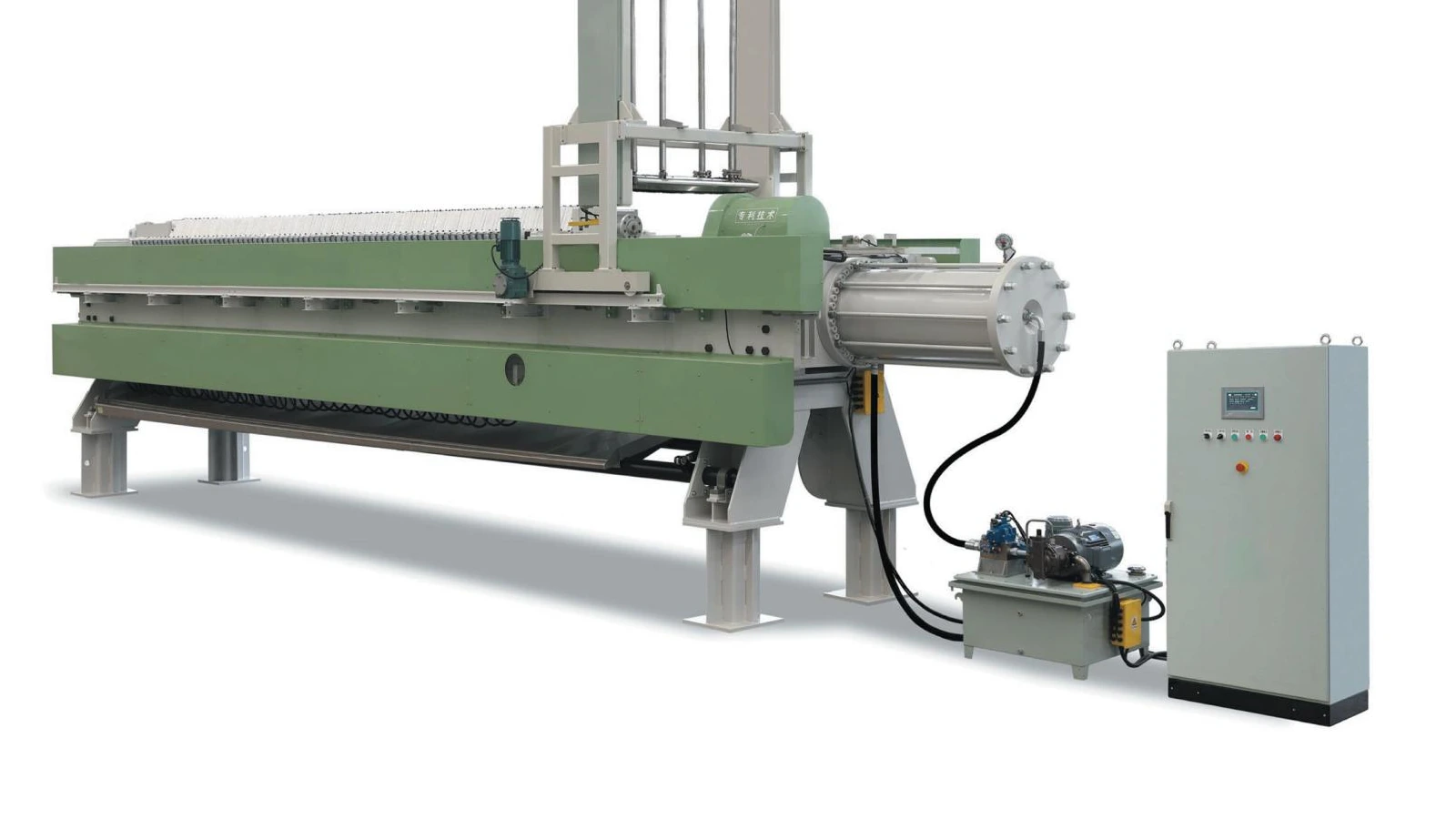
A filter press forms chambers between plates, feeds slurry into them, and collects filtrate while solids form a cake. Choose the structure according to the task: batch dewatering, mechanical pressing, washing with separate collection, reduced manual handling, transport, or testing. Filtration area is not a guarantee of throughput.
- Chamber: recessed chambers for straightforward batch cake formation.
- Membrane: a separate squeezing step when the material and process require it.
- Automatic: controlled cycle steps with reduced routine handling; operators still supervise.
- Plate and frame, fast-opening, cake-washing, mobile, and laboratory designs address distinct process or site needs.
| Selection question | Information to confirm | Why it matters |
|---|---|---|
| Slurry | Solids, particle size, concentration, temperature, pH, abrasiveness | Affects cloth, wetted materials, and testing. |
| Objective | Filtrate, recoverable solids, washing, or reduced wet volume | Sets the process boundary and configuration. |
| Site | Pump, drainage, power, air or water, space, lifting, discharge | Defines interfaces and access requirements. |
From Slurry Data to a Defined Press
Separate wet feed quantity from dry-solids quantity, and distinguish feed pressure, any membrane squeezing pressure, and hydraulic system pressure. Cloth cleaning restores permeability; cake washing sends liquid through the cake and may require separate collection.
The confirmed filter plate series covers 250–2000 mm, with 1000 mm and 1250 mm examples. These examples do not establish a common size, depth, pressure, capacity, or utility requirement for every configuration; Shengqi confirms the model after review.
| Step | Customer provides | Selection action |
|---|---|---|
| 1. Describe | Material, solids basis, temperature, pH, and history | Identify testing or missing data. |
| 2. Define | Filtrate destination, cake handling, washing, acceptance criteria | Set a realistic separation objective. |
| 3. Confirm | Layout, utilities, automation, plates, cloth, project stage | Prepare the configuration and quotation scope. |
Equipment, Plates, Cloths, and Connected Support
A press may connect to feed pumps, dosing equipment, conveyors, cake breakers, drainage, and controls. System pages explain module connections and site responsibilities; application pages focus on material behavior; engineering pages cover testing and sizing.
For replacement work, send the nameplate, front, back, side, handle, hole, sealing, cloth, and connection photographs with dimensions and operating conditions. Similar-looking parts can differ in depth, port position, sealing edge, fixing method, or material.
- For a new press, submit slurry and site information for equipment selection.
- For plates or cloths, use the measurement guide and attach drawings or sample photographs.
- Use a real filtrate or cake-handling criterion; the press does not itself certify final water quality or dry the cake.
Frequently Asked Questions
How do I start a filter press inquiry?
Send the material, wet feed amount and units, dry-solids estimate, temperature, pH, objective, schedule, utilities, and country. A sample, drawing, test history, or nameplate helps.
Is the 1000 mm or 1250 mm example automatically suitable?
No. They are examples within the confirmed 250–2000 mm series. Size, depth, cloth, pressure boundaries, and auxiliaries require project confirmation.
Can an automatic press also use membrane plates?
Yes. Automation describes the sequence while membrane plates describe a pressing function. Compatibility, utilities, safeguards, and operator tasks must be confirmed.
Can you guarantee moisture or capacity here?
No. Slurry, solids loading, cloth, chamber filling, cycle settings, pressing, and tests affect results. A project review is required.