Explore the range
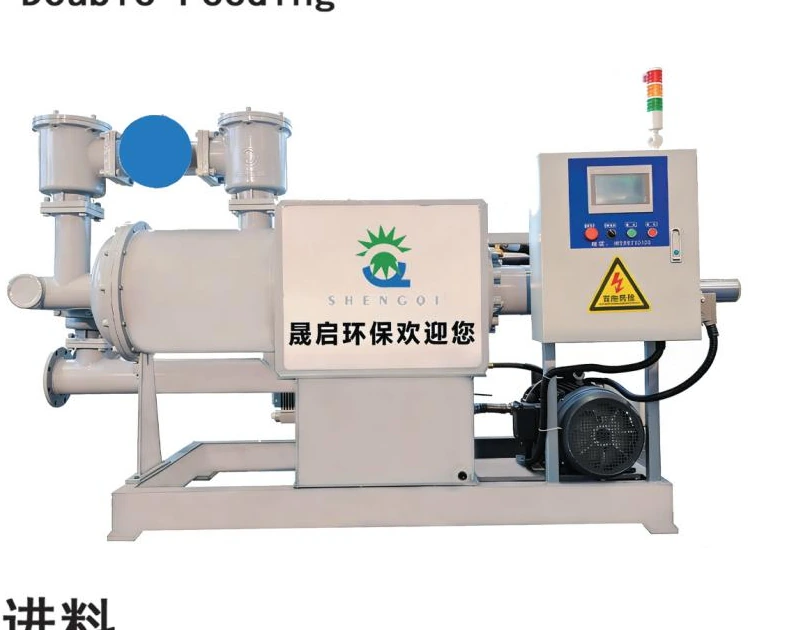
Select a filter press feed pump around slurry properties, pressure stages, pipework and control limits. Shengqi helps confirm the pump, press and site interface before quotation.
Specify a polymer dosing system around your slurry, polymer product, mixing requirement and filter press cycle. Shengqi helps confirm interfaces without assuming a universal recipe or capacity.
Plan a filter cake conveyor around press discharge height, cake behavior, transfer distance, cleaning needs, and safe access. Shengqi helps confirm interfaces from real site data.
Break discharged filter cake into manageable pieces for conveying, collection, or downstream handling. Confirm cake behavior, duty, layout, and safety interfaces with Shengqi.
- 01Describe material and duty→
- 02Map press and site interfaces→
- 03Review auxiliary equipment→
- 04Confirm controls and safe access→
- 05Issue coordinated quotation
The sequence identifies interfaces; it does not replace testing, drawings, installation approval or site safety procedures. The duties remain distinct modules.
Choose the Supporting Equipment Around the Press
Start with the process duty rather than a catalogue label. A feed pump must match the slurry, pipe route and press filling conditions. A polymer dosing system belongs to a conditioning step when the material and test results justify it. A conveyor or cake breaker is selected from the cake discharge arrangement, material behavior and receiving equipment. These are separate decisions that can be coordinated with the press project.
- Confirm solids, liquid, temperature, pH, abrasiveness and sticky behavior.
- Mark tanks, pipe route, discharge point, receiving equipment and utilities on a layout.
- Define cake drop height, transfer distance and the next handling step.
- Separate manual, semi-automatic and automatic functions in the operating description.
| Project question | Selection consequence |
|---|---|
| What enters the press? | Review slurry data, pipe size, route, elevation, temperature and duty pattern. |
| What leaves the press? | Define cake form, drop point, transfer distance and receiving equipment. |
| What is already installed? | Record pumps, tanks, instruments, controls, power and available space. |
| What must the operator do? | Identify loading, inspection, cleaning, adjustment and safe isolation tasks. |
Four Equipment Groups and Their Boundaries
Feed pumps move prepared slurry into the press and should be reviewed with the filling sequence, solids content and line resistance. Polymer dosing systems support conditioning when the process calls for it; they do not replace filtration testing or guarantee a result. Conveyors transfer discharged cake when the layout needs a controlled route. Breakers can loosen or divide cake before storage or transport, but sticky material still requires practical evaluation.
| Equipment | Confirm before quotation |
|---|---|
| Feed pump | Slurry description, flow basis, pipe route, elevation, temperature and duty. |
| Polymer dosing | Conditioning objective, product information, mixing point and control preference. |
| Cake conveyor | Drop position, transfer length, inclination, receiving equipment and cleaning access. |
| Cake breaker | Cake cohesiveness, expected lumps, required discharge form and guarding needs. |
A Practical Selection Process
Send material and layout information before requesting a combined quotation. Drawings, photographs and existing nameplates help when an auxiliary device connects to an installed press. Where slurry behavior or cake release controls the duty, discuss testing or sample review instead of relying on an unsupported performance promise. Shengqi can separate confirmed information from items requiring engineering approval.
- 1. Describe material, solids basis, temperature, pH and abrasive or sticky behavior.
- 2. Map the press, tanks, pipe route, discharge point and available utilities.
- 3. Identify controls, interlocks, safe isolation points and operator actions.
- 4. Confirm dimensions, materials, interfaces and testing requirements.
- 5. Review installation and commissioning responsibilities in the quotation.
Frequently Asked Questions
Can auxiliary equipment be quoted with a new filter press?
Yes. Share press duty, slurry information, layout and downstream handling requirements so the modules can be reviewed together.
Does polymer dosing remove the need for filtration testing?
No. Dosing may support conditioning, but material response and filtration behavior still need confirmation.
What should I send for a conveyor or breaker review?
Send cake photographs or samples when available, drop point, transfer distance, receiving equipment, cleaning access, operating pattern and required discharge form.