- 01Prepare and close pack→
- 02Feed slurry→
- 03Collect filtrate→
- 04Confirm end point→
- 05Isolate and release pressure→
- 06Open and remove cake→
- 07Inspect and reset
The flow separates normal filtration, cake discharge, and maintenance. Cake washing or cloth washing is an additional, separately confirmed step; it is not implied in every default cycle.
When to Choose This Filter Press
Choose a plate and frame filter press when a batch process benefits from individual frames that define the cake space between filter plates. The separate frame-and-plate construction can make the filtration path easy to understand, allow cloths to be inspected one position at a time, and support a selection based on required cake thickness, slurry behavior, and washing or collection arrangements. It can suit mineral slurries, stone and sand wastewater, ceramic or kaolin suspensions, and other process streams, but suitability must be checked against the actual solids, temperature, pH, particle size, and filtration objective.
This press is not selected by plate size alone. Filtration area describes the cloth area available for separation; it does not by itself state wet feed capacity, dry-solids throughput, cycle time, cake moisture, or filtrate quality. A plate and frame press may be a poor fit if the process requires continuous operation, very rapid automatic opening, or a specialized membrane squeeze stage. In those cases, the review should compare the required sequence with an automatic, chamber, membrane, or cake-washing configuration rather than assuming that one structure replaces another.
- Use when a defined, repeatable cake thickness is important to the batch procedure.
- Use when cloth access, visual inspection, and individual component replacement matter.
- Review separately when the slurry is highly compressible, sticky, abrasive, hot, corrosive, or difficult to release.
- Do not treat a plate series example as a promise that every frame depth, material, pressure, or capacity is available.
| Decision question | What to confirm before selection |
|---|---|
| Separation duty | Is the target clarified liquid, recoverable solid, washable cake, or a combination? |
| Cake space | What cake thickness is required, and does the slurry fill that space evenly? |
| Batch operation | How many cycles are expected, and which steps remain operator-controlled? |
| Material compatibility | Are plate, frame, cloth, gasket, and wetted fittings compatible with the slurry? |
| Release behavior | Does the cake fall under gravity, or is a release aid or handling step required? |
How It Works
The press closes a pack of alternating plates and frames. A filter cloth is fitted to the filtration faces, while the frame forms the space in which retained solids accumulate. Feed slurry enters through the selected inlet arrangement and moves toward the cloth. Liquid passes through the cloth and internal channels to the filtrate outlet; solids remain in the frame space and build a cake. The feed stage ends when the confirmed process criterion is reached, such as a pressure trend, filtrate condition, flow response, or agreed batch time.
After filtration, the feed is isolated and the press is made safe according to the site procedure. The pack is opened only after pressure has been released and the relevant safeguards have been verified. Plates are separated in sequence so the cakes can discharge to the receiving area. Cloth washing is a maintenance or process step and is not the same as washing the filter cake. If cake washing is required, the flow path, wash liquid collection, and product-filtrate separation must be designed specifically; it should not be assumed to be part of every standard cycle.
- Close and secure the plate-and-frame pack; verify the correct cloth and gasket arrangement.
- Feed the conditioned slurry while monitoring the agreed process indicators.
- Collect filtrate through the designated channels and keep separate streams identified.
- Stop feed, isolate the line, release pressure, and confirm the safe condition before opening.
- Open the pack, remove cakes, inspect cloth seating, then clean and reset for the next batch.
Main Components
The plate and frame pack is the process core. Plates provide drainage faces and filtrate channels; frames create the cake chambers; cloths provide the separation surface and sealing interface. The fixed head, moving head, side bars or support arrangement, and closing device keep the pack aligned. Feed and filtrate manifolds connect the pack to the slurry and collection lines. The exact closing, opening, support, and control arrangement should be confirmed against the selected model and site handling method.
A useful equipment review labels the component, states its function, and records the inspection point. This avoids treating an equipment photograph as proof of a particular pressure rating or plate count. Shengqi can review drawings, plate and frame samples, cloth details, and site requirements with the project information supplied by the buyer.
| Component | Function and selection check |
|---|---|
| Filter plate | Supports cloth and drains filtrate; confirm dimensions, material, sealing edge, ports, and compatible frame. |
| Filter frame | Defines cake space; confirm internal depth, profile, rigidity, and clean-out access. |
| Filter cloth | Retains solids and seals the pack; confirm weave, opening, attachment, necks, and chemical/temperature conditions. |
| Closing assembly | Applies pack-closing force; confirm operating method, alignment, guards, and safe release procedure. |
| Manifold and ports | Direct feed and filtrate; confirm inlet location, outlet arrangement, drain points, and hose or pipe interfaces. |
| Support and discharge area | Carries the pack and receives cake; confirm floor loading, clearance, containment, and handling route. |
Technical Specifications
The confirmed reference material identifies a digital filter plate series from 250 to 2000 mm and gives 1000 mm and 1250 mm examples. These references describe a range for plate selection, not a blanket specification for every plate-and-frame press. A project quotation must confirm the actual plate and frame dimensions, number of positions, filtration area, chamber or frame depth, materials, closing method, and permitted operating conditions for the selected assembly.
Pressure terms must remain separate. Feed pressure concerns slurry delivery into the press; any squeeze or wash pressure belongs to its own operation; hydraulic-system pressure concerns the closing or power circuit. None should be inferred from plate size or substituted for another in a purchase specification. Likewise, a filtration area cannot be converted directly into guaranteed throughput, cake moisture, or cycle duration without slurry testing and operating assumptions.
| Specification field | Confirmed reference or selection item |
|---|---|
| Plate series reference | 250–2000 mm range is referenced; confirm the exact nominal size for this press. |
| Example sizes | 1000 mm and 1250 mm examples are referenced; examples are not a universal availability or performance promise. |
| Plate and frame count | To be selected from required area, cake space, handling method, and site limits. |
| Filtration area and volume | Calculate for the confirmed assembly; do not present either as guaranteed production capacity. |
| Wetted materials | Confirm plate, frame, cloth, seal, manifold, and fastener materials against slurry chemistry. |
| Operating limits | Confirm feed, closing, washing, and any other pressures separately with the approved design. |
| Performance | Throughput, cycle time, cake moisture, and filtrate result require slurry data or test confirmation. |
Available Configurations
Configuration is built around the separation task rather than a generic feature list. The pack may be arranged for a selected plate and frame size, cloth attachment method, feed entry, filtrate discharge, and receiving layout. Material choices should follow the slurry and cleaning conditions. A manual or assisted opening arrangement can be considered according to plate weight, cycle frequency, labor access, and the required safeguards. Automation can be added to selected tasks without changing the basic plate-and-frame filtration principle; it does not remove the need for safe isolation, inspection, or operator responsibility.
Where the process needs product washing, separate wash channels or collection arrangements must be reviewed. Where solids are sticky or abrasive, cloth construction, release behavior, cake handling, and cleaning access become decision points. Any pump, polymer dosing, conveyor, or cake breaker is a connected auxiliary choice and should be specified by its interface and duty, not assumed to be included in the press.
- Plate and frame dimensions selected from the confirmed slurry duty and handling limits.
- Cloth material, weave, attachment, and sealing details matched to the solids and liquid.
- Feed and filtrate arrangement selected for open, closed, separated, or monitored collection needs.
- Manual, assisted, or automated movements reviewed with guarding, interlocks, and safe access.
- Optional feed pump, dosing, cake transport, or cake breaking interfaces documented separately.
Slurry Data Needed for Selection
A useful selection starts with a representative slurry description, not only a requested press size. Send the wet feed rate with its unit and distinguish it from dry-solids rate. Include solids concentration, particle-size information if available, viscosity or settling behavior, temperature, pH, abrasive or fibrous content, and whether the solids must be recovered. Explain whether the filtrate must be clear for reuse, discharge, or a downstream process; visual clarity alone is not the same as regulatory or process compliance.
If the slurry changes during the day, provide the operating range and identify the worst credible condition. A sample, laboratory result, existing cloth information, or previous cycle record can make the review more useful. If data is unavailable, state that it is unknown and arrange a testing discussion rather than filling the selection sheet with assumed values.
| Data group | Buyer should provide |
|---|---|
| Feed | Wet feed quantity, units, batch size, daily cycles, and available operating hours. |
| Solids | Dry-solids estimate, concentration method, particle description, abrasiveness, and compressibility observations. |
| Liquid | Temperature, pH, chemistry, dissolved salts or oils, and any cleaning exposure. |
| Objective | Cake handling goal, filtrate destination, recovery target, washing requirement, and discharge constraints. |
| Existing equipment | Press model, plate/frame dimensions, cloth details, pump information, and cycle records if replacing. |
| Site | Power, floor level, lifting access, drainage, containment, ambient conditions, and receiving equipment. |
Installation Requirements
Before delivery, confirm a level and adequately supported installation position, the complete opening and maintenance envelope, and a route for moving plates, frames, cloths, and cakes. The receiving area must allow cake removal without blocking emergency access. Provide feed and filtrate lines with the correct connection points, isolation valves, drains, supports, and containment. The pump must be selected and controlled for the confirmed feed duty; a pump that can exceed the press limits is not a substitute for process control.
Electrical work, control wiring, guarding, and site commissioning must follow the approved equipment drawings and local requirements. Keep pressure instruments visible and provide a safe means to isolate and depressurize the press. Do not open a press under pressure, perform electrical work while energized, or defeat an interlock. The site owner should define responsibility for foundations, lifting, piping, utilities, sludge or cake handling, and final acceptance tests before installation.
- Verify foundation or floor support, level, access, lifting route, and maintenance clearances.
- Prepare feed, filtrate, drain, wash, and overflow interfaces with isolation and containment.
- Confirm power supply, control location, guarding, emergency stops, and interlock responsibilities.
- Plan cake receiving, cloth washing, wastewater collection, and safe housekeeping.
- Commission with an agreed checklist and the actual slurry or an approved test substitute.
Maintenance and Replacement Parts
After each batch, inspect cloth seating, plate and frame sealing faces, filtrate channels, manifolds, and visible fasteners. A small leak should be treated as a stop-and-check signal, not normalized by increasing closing force or pressure. Keep the pack clean enough that solids do not prevent correct alignment. Cloth washing must match the cloth material, slurry residue, temperature, and site safety procedure; there is no universal chemical recipe that is safe for every cloth, plate, gasket, or process liquid.
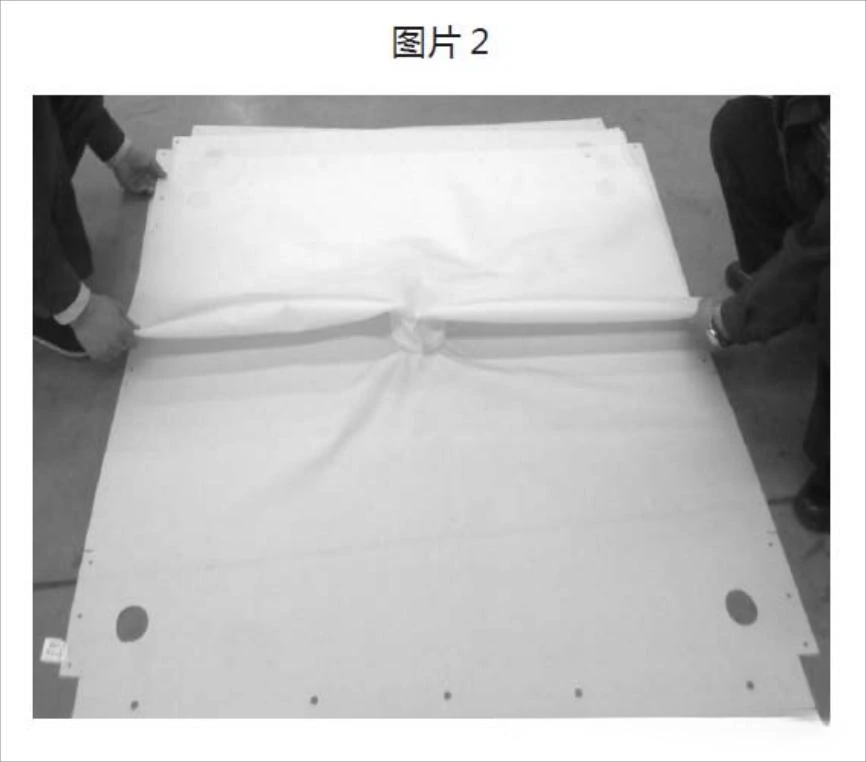
For replacement plates or frames, provide the equipment nameplate, front, back, side, and handle photographs, plus measured length, width, thickness, frame depth, hole positions, sealing arrangement, puller details, squeeze or service ports, material, and operating conditions. For replacement cloths, provide the plate and cloth installation form, center or corner holes, neck and edge construction, attachment and stitching, dimensions, original sample, and the difference between like-for-like replacement and a proposed improvement. Drawing review and sample confirmation should precede batch supply.
| Part or check | Inspection and ordering information |
|---|---|
| Cloth | Record dimensions, attachment, openings, fabric type, seams, condition, and slurry exposure. |
| Plate or frame | Record nameplate, all faces, handles, thickness, depth, ports, seal, material, and quantity. |
| Seal and seating | Check cuts, hardening, embedded solids, alignment, and contact surfaces before reuse. |
| Manifold and valves | Check leaks, blockages, support, isolation, and correct stream identification. |
| Safety and controls | Test only under the approved safe procedure; never bypass interlocks or work energized. |
Frequently Asked Questions
What is the difference between a plate and frame filter press and a chamber filter press?
A plate and frame press uses separate frames to define the cake spaces between plates, while a chamber press generally uses recessed plate faces to form the chambers. The selection depends on cake thickness, cloth and sealing details, slurry behavior, washing needs, handling, and the required operating method—not on the name alone.
Can you confirm a press size from the 1000 mm or 1250 mm examples?
Those are referenced examples within the available plate information. They do not confirm a complete press, plate count, filtration area, pressure, or throughput for your project. Send slurry and site data so the exact plate, frame, and configuration can be reviewed.
Does filtration area tell me how much slurry the press can process?
No. Area is a geometric filtration measure. Wet feed, dry-solids loading, cake thickness, resistance, cloth, cycle time, conditioning, and filtrate objectives all affect actual operation. A capacity statement requires defined assumptions and, where needed, testing.
Can the plate and frame press wash the cake?
Cake washing may be possible when the plate, cloth, channels, collection, and operating sequence are designed for it. Confirm the wash liquid, temperature, chemistry, separation of wash filtrate, and product objective; do not assume a standard press includes a validated wash cycle.
What should I send for a replacement plate or frame quotation?
Send the nameplate, clear front/back/side and handle photographs, measured length, width, thickness, frame depth, hole positions, sealing and puller details, ports, material, quantity, and slurry conditions. A drawing or physical sample helps confirm the match before batch supply.
Who should operate and maintain the equipment?
The site owner should assign trained operators and maintenance personnel under its safety procedures. Shengqi can review the selected configuration and installation information, but the press must never be opened under pressure, repaired while energized, or operated with a bypassed interlock.