- 01Describe slurry and separation objective→
- 02Confirm movement route, surface and handling method→
- 03Review plate, cloth, pump and utility interfaces→
- 04Confirm site safety and operating boundaries→
- 05Select configuration or testing basis→
- 06Plan transport, installation and commissioning
The flow separates process selection from transport planning. Feeding, membrane squeezing, cake washing and cloth washing are different operations and are included only when the selected design and site interfaces support them.
When to Choose This Filter Press
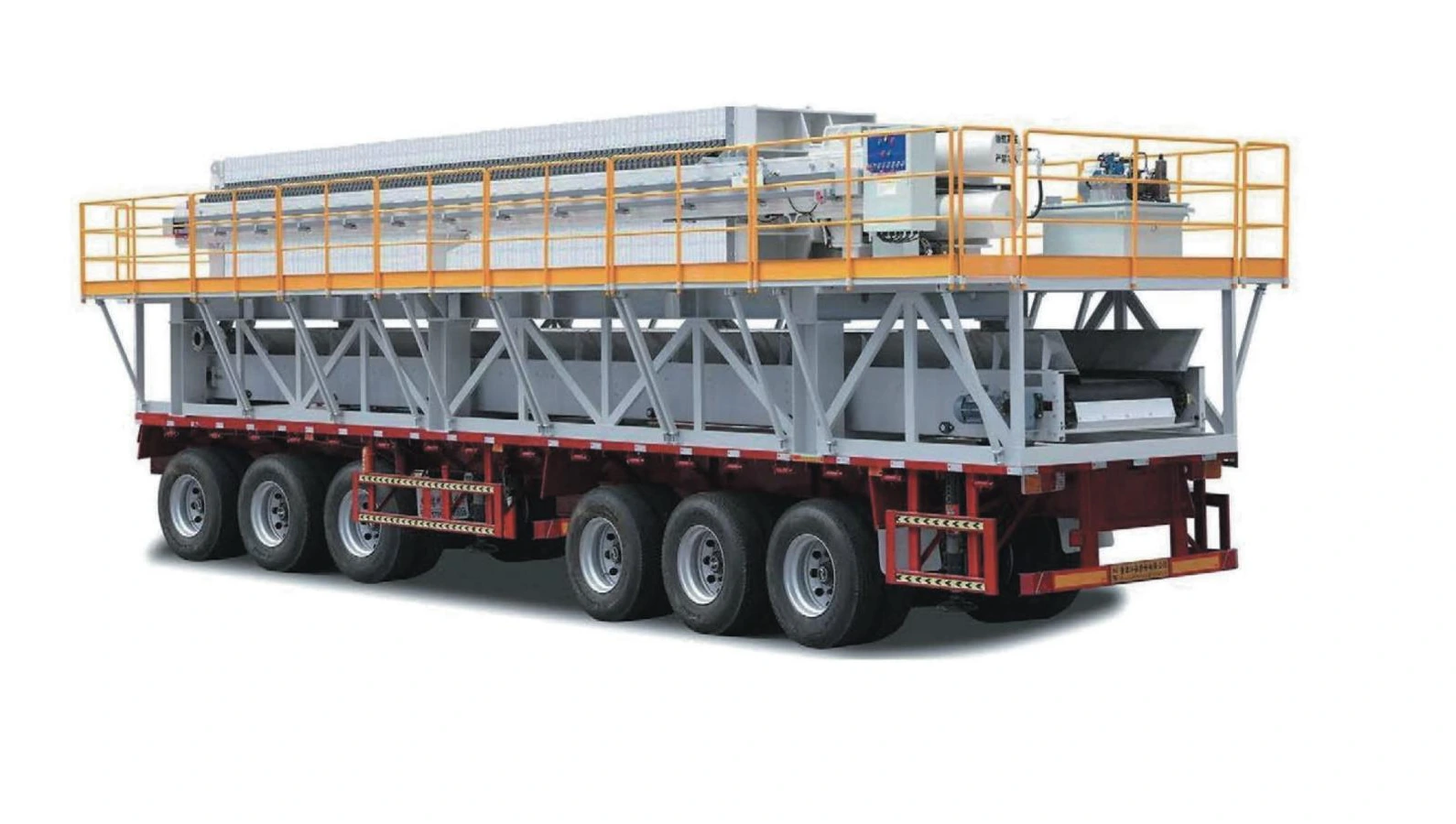
Choose a mobile arrangement when the press must be relocated between batches, temporary treatment areas, project sites or production lines. A skid, wheeled frame or other transport arrangement can reduce the need to build a dedicated press room, but it does not remove the need for a level bearing surface, a safe operating envelope and correctly routed utilities. Mobility is a site and handling decision; it is not a substitute for selecting the right filtration cycle.
This format can suit contractors, quarry or stone operations with changing work fronts, pilot or seasonal treatment, and facilities that need one press to serve more than one feed point. A fixed press may be more appropriate where daily operation is continuous, pipework is permanent, access is restricted after installation, or the building and foundations already support a dedicated process line. A mobile frame may also be combined with automatic controls or a membrane press; automation and membrane squeezing describe different functions and are not mutually exclusive.
- Relocatable dewatering between defined work areas or campaigns.
- Temporary or phased projects where permanent civil work is limited.
- Shared equipment only when feed, filtrate, cake and power interfaces can be repeated safely.
| Decision item | What to confirm before selecting a mobile arrangement |
|---|---|
| Movement frequency | How often the unit moves, expected campaign length and whether cleaning is required before movement. |
| Transport method | Wheels, forklift pockets, lifting points, trailer or crane method, route limits and permitted load. |
| Site surface | Level bearing surface, drainage, working clearance and access for opening, cloth service and cake removal. |
| Process boundary | Which feed pump, valves, hoses, filtrate lines, cake handling and controls travel with the press. |
How It Works
The filtration cycle remains a pressure-driven separation process even when the equipment is mobile. A feed pump sends prepared slurry into the closed plate pack. Solids accumulate in the chambers while liquid passes through the filter cloth and internal filtrate passages. The filtrate leaves through the selected outlet arrangement for collection, reuse or further treatment. When the selected cycle is complete, the feed is isolated and the pressure condition is safely relieved according to the operating procedure before the plate pack is opened and the cake is discharged.
If a membrane plate configuration is selected, a separate squeezing step may compress the formed cake using the membrane-side service connection. That squeezing step must be specified and controlled separately from feed pressure and from the hydraulic system pressure used to close the plate pack. A mobile installation must provide secure hoses, accessible isolation and a method for checking connections after every move. Cake washing, if required, is a defined process step with its own liquid path and collection requirements; it is not the same as washing the filter cloth.
- Position and secure the unit before connecting process services.
- Feed slurry through the selected pump and monitor the filtrate path rather than inferring output from plate area alone.
- Separate feed pressure, any membrane squeeze pressure and hydraulic closing pressure in records and checks.
- Open and discharge only after the cycle is stopped, isolated and confirmed pressure-free.
- Disconnect, cap and protect hoses before movement; never move a connected or unstable unit.
Main Components
The mobile arrangement is built around the filter press plate pack, closing assembly and a transportable support. The plate pack determines the filtration geometry and must be matched to the slurry and cloth. A hydraulic closing system holds the plates together during the cycle; its hydraulic pressure is a machine closing parameter, not the same measurement as slurry feed pressure. A mobile frame, skid or wheel arrangement transfers the equipment load to the site surface and provides the movement interface.
The feed side normally includes a pump connection, inlet valves and flexible or hard-piped sections selected for the service. Filtrate manifolds, outlet valves and collection hoses direct liquid away from the plate pack. Depending on scope, the package may include a local control cabinet, sensors, a drip tray or collection arrangement, air or water connections, and provisions for cake removal. These are configuration items to confirm, not universal inclusions.
| Component or interface | Function and selection question |
|---|---|
| Plate pack and filter cloths | Create the filtration chambers; confirm plate format, cloth arrangement, sealing and slurry compatibility. |
| Closing and hydraulic assembly | Closes and holds the pack; confirm power, isolation and access for maintenance. |
| Mobile support | Carries the equipment during operation and movement; confirm frame, wheels, skid or lifting interface. |
| Feed and filtrate connections | Move slurry and separated liquid; confirm sizes, hose materials, routing and collection points. |
Technical Specifications
Available information confirms a digital filter plate series in the 250–2000 mm range, with 1000 mm and 1250 mm examples. These examples indicate a plate family for discussion; they do not establish that every mobile press, frame or configuration is available at every size. The selected model, plate count, chamber arrangement, closing method, materials and utilities must be confirmed against the application.
A meaningful selection record distinguishes filtration area, chamber volume, wet slurry feed and dry solids. Filtration area describes the cloth surface available for separation; it is not a guaranteed throughput. Capacity and cycle time depend on solids concentration, particle size, compressibility, viscosity, cloth, conditioning, feed pump and the required endpoint. Cake moisture also depends on material and cycle conditions, so it must be established through representative testing or an agreed operating basis rather than inserted as a generic promise.
The specification should also state the transport envelope and the operating envelope separately. Record overall dimensions, operating mass, lifting or towing arrangement, access clearance, electrical supply, pump duty, hose lengths, drainage and control requirements only after they are confirmed for the selected design.
| Specification group | Confirmed or required selection information |
|---|---|
| Plate series | Confirmed reference range: 250–2000 mm series; 1000/1250 mm examples require model confirmation. |
| Filtration geometry | Plate count, chamber depth, filtration area and chamber volume to be calculated for the selected configuration. |
| Process conditions | Slurry flow basis, solids concentration, particle characteristics, viscosity, temperature and pH. |
| Pressure records | Feed pressure, membrane squeeze pressure if used, and hydraulic closing pressure recorded as separate values. |
Available Configurations
The mobile concept can be developed around a skid, wheeled frame or another transportable support selected for the site handling method. The press itself may be chamber, membrane or another plate arrangement within the confirmed manufacturing scope. A mobile frame can include manual or automated plate movement, but the choice should follow required cycle control, available power, discharge access and operator responsibility. Automatic functions do not remove the need for inspection, isolation, cloth care or safe discharge.
Possible additions include feed pump matching, filtrate manifolds, flexible service connections, cake conveyors or breakers, local controls and a membrane squeeze circuit. These components should be listed as included, excluded or supplied by others. If two locations share the unit, duplicate connection kits may reduce changeover confusion, but each kit still needs a compatibility check and a defined cleaning and storage method.
- Transportable skid, wheeled frame or lifting-compatible support, subject to load and route confirmation.
- Chamber or membrane plate arrangement selected from slurry and cake requirements.
- Manual or automated plate handling based on cycle and operator tasks.
- Feed, filtrate, air, wash and cake-handling modules specified as part of the scope or by others.
- Control and safety arrangement documented for each operating location.
Slurry Data Needed for Selection
Send the material information before selecting the mobile frame or plate pack. Start with the source and purpose: sand-washing sludge, stone wastewater, mineral concentrate, tailings, ceramic slurry, chemical filtration or another material. Describe whether the feed is intermittent or continuous, whether solids are recovered as a product or disposed of, and whether filtrate is recycled, collected or sent to further treatment.
Provide a measured or clearly identified basis for wet feed quantity and dry solids quantity. Include solids concentration, particle-size information where available, viscosity or settling behavior, temperature, pH and any hazardous or abrasive characteristics. State the required cake handling method, allowable cycle duration, target filtrate condition and whether cake washing or membrane squeezing is being considered. These data guide the process selection; they do not by themselves guarantee a result without testing.
| Customer input | Useful detail for review |
|---|---|
| Material | Source, product or waste status, abrasive or corrosive behavior and sample availability. |
| Quantity | Wet slurry quantity and dry solids quantity with units and operating hours per day. |
| Separation objective | Cake handling, filtrate reuse or treatment, recovery target and any washing requirement. |
| Test basis | Representative sample, previous cycle records, laboratory data or a request for filtration testing. |
Installation Requirements
A mobile press still needs a prepared operating position. The surface must be suitable for the operating load and level enough for the frame and plate pack to remain stable. Provide space to connect services, inspect the plate pack, open the press, remove cake, clean cloths and move personnel safely. Keep the movement route separate from the operating zone, and define where the unit will be parked when not in use.
Prepare a process sketch showing slurry source, feed pump, press inlet, filtrate outlets, wash or squeeze services if any, cake destination and drainage. Confirm electrical voltage and protection, control location, earthing, hose protection and the isolation points. If a pump or auxiliary module is supplied separately, identify the owner of each connection and commissioning check. A mobile package should not be commissioned simply by connecting hoses; the operator must verify direction, valve position, leakage, plate closure, emergency isolation and safe discharge procedures.
- Provide a level, load-suitable and drained operating surface.
- Reserve opening, maintenance, cake removal and personnel clearance around the press.
- Confirm power, earthing, feed, filtrate, wash or air services and isolation points.
- Prepare a route and movement method that matches the actual frame and local rules.
- Complete a documented pre-start and post-relocation inspection.
Maintenance & Replacement Parts
After each cycle, inspect the cloth sealing edges, feed opening, filtrate passages and plate faces for retained solids or damage. A mobile unit is exposed to repeated connection and movement, so check hose ends, clamps, valves, cable protection, frame fasteners, wheel or skid hardware and lifting interfaces as well as the press itself. Keep a record of plate order, cloth orientation and any leakage location to make troubleshooting repeatable at every site.
Cloth washing is different from cake washing. Cloth cleaning should follow the material, cloth and plate supplier's approved method; do not apply a generic chemical recipe without checking the cloth, seals, wetted materials and slurry hazards. If cleaning does not restore permeability, compare the cloth condition and cycle data before deciding on replacement. Plates should be replaced only after confirming the correct dimensions, sealing profile, holes, handles, plate material and press compatibility.
| Inspection point | Action before requesting a replacement |
|---|---|
| Cloth | Photograph orientation, sealing edge, holes, stitching and wear; record material and service. |
| Plate | Record nameplate, face dimensions, thickness, chamber depth, handles, holes and sealing profile. |
| Connections | Check hoses, valves, clamps, filtrate outlets and squeeze or wash interfaces after each move. |
| Transport frame | Inspect fasteners, supports, wheels or skid, lifting points and visible distortion. |
Mobile Press Selection and Quote Checklist
A useful inquiry combines process, transport and commercial information. Send the slurry description and sample status with the plate preference if known, then describe the site movement plan. Andy can use this information to distinguish a mobile press requirement from a fixed installation with temporary pipework, and to identify whether testing or a replacement review is needed.
- Contact name, company, country, email and WhatsApp contact.
- Material source, wet slurry quantity and dry solids basis with units.
- Plate size or existing nameplate, if this is a replacement or upgrade.
- Required cake destination, filtrate destination and any washing or squeezing step.
- Number of operating locations, movement frequency, route and lifting or towing method.
Frequently Asked Questions
Is a mobile filter press automatically a fully automatic machine?
No. Mobility describes the transport arrangement. Plate movement, feed control, cloth washing, cake discharge and other functions may be manual or automated and must be specified separately. Automated controls still require trained operators and safe isolation.
Can a mobile press use membrane squeezing?
A membrane configuration may be considered when the material and required separation step justify it. Feed pressure, membrane squeeze pressure and hydraulic closing pressure are separate values, and the mobile package must include safe service connections and controls for the selected arrangement.
What information is needed to quote the equipment?
Provide slurry source, wet and dry solids basis, particle or settling information, temperature, pH, cake and filtrate objectives, operating hours, movement route, transport method, site surface, utilities, drainage, photos and any existing nameplate or drawings. A representative sample is useful when cycle behavior is uncertain.
Does the 250–2000 mm plate range apply to every mobile model?
No. The confirmed information describes a digital plate series in the 250–2000 mm range, with 1000 mm and 1250 mm examples. The applicable plate size, count and mobile frame must be confirmed for the selected model and application.
How should the press be moved safely?
Follow the supplied handling instructions and local procedures. Stop the cycle, isolate energy and process connections, relieve pressure, secure loose parts and use only the identified lifting, wheel, skid or towing interfaces. Never move a press while it is pressurized or unstable.