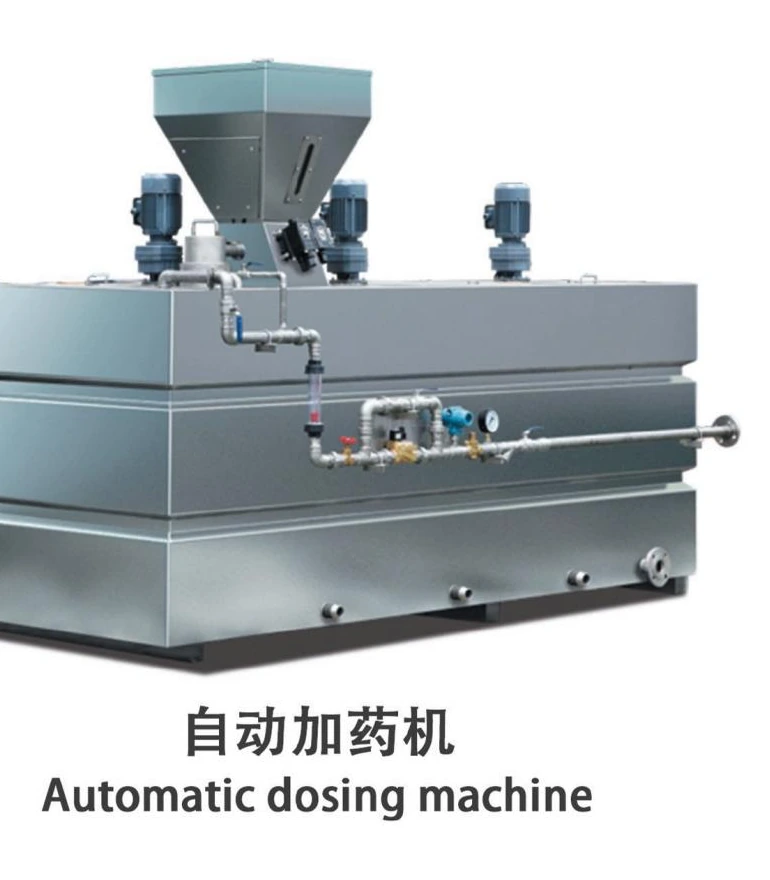
- 01Approved polymer receipt→
- 02Preparation or dilution→
- 03Mixing and aging→
- 04Metering pump→
- 05Injection and contact→
- 06Filter press feed
The actual sequence, concentration, contact time and control permissives require polymer supplier information and representative slurry testing. Preparation, dosing and filter press operation are related but separate responsibilities.
When to Choose a Polymer Dosing System
Choose this auxiliary package when conditioning is part of the separation sequence and a repeatable feed of prepared polymer is needed before a flocculation point or filter press feed. The package may include product handling, preparation or aging, metering, agitation, piping and controls. The process owner and integrator must agree the boundary.
Polymer does not replace a suitable press, cloth or representative slurry test. It can affect aggregation, filtrate clarity, cake release, cycle behavior and cloth fouling. Shengqi does not provide a universal chemical recipe, dosage guarantee or fixed treatment result without application data and testing.
- Use a dosing package when the polymer product, concentration range and point of addition are already defined or can be tested.
- Keep the dosing skid, injection point and filter press control responsibilities explicit in the process design.
| Decision question | Information to confirm before selection |
|---|---|
| Material | Slurry source, solids character, temperature, pH and suspended-solids behavior |
| Polymer | Dry or liquid form, supplier data, product family, handling limits and trial status |
| Process point | Where conditioning occurs, required contact time and downstream equipment |
How the Dosing Sequence Works
A typical sequence receives the approved polymer, prepares or dilutes it, mixes or ages the solution, then meters it to the defined injection point. Gentle downstream mixing allows contact with the slurry before the conditioned feed reaches the separation equipment.
Preparation time, concentration, injection rate and mixing intensity must be validated for the selected product and slurry. Dosing controls handle preparation, level, metering and agreed interface permissives; the filter press controls its own filtration cycle.
- Receive and identify the approved polymer product.
- Prepare or dilute it using the supplier's handling instructions and the confirmed water quality.
- Mix or age the solution for the tested process condition.
Main Components and Their Roles
The package is assembled around the preparation method and dewatering-line interface. A tank provides a controlled vessel; an agitator keeps the solution within its intended condition; a metering pump delivers the selected rate. Valves, strainers, level instruments and flushing support operation and cleaning.
A local panel or plant connection can coordinate levels, pump status, alarms and the agreed start/stop relationship. Automation reduces repeated manual actions but does not remove product checks, inspection or safe isolation.
| Component | Selection or review point |
|---|---|
| Preparation or storage tank | Working volume, material compatibility, access, drain and containment |
| Agitator or mixer | Required mixing duty, shear sensitivity, mounting and cleanout access |
| Metering pump | Product viscosity, flow range, suction arrangement, pulsation and spare parts |
Technical Specifications to Confirm
There is no responsible universal capacity or dosage value. Size the equipment from preparation volume, operating pattern, polymer form and tested dosing range. Confirm the following items before converting the enquiry into a technical basis.
- Polymer state: dry powder, emulsion or other supplier-defined form.
- Preparation concentration or dilution range: supplier and test result, not a generic formula.
- Required solution volume per hour or per batch, with unit and operating schedule.
Available Configurations and Control Boundaries
A system may be a preparation-and-aging package, storage-and-metering package, or combined skid. Choose manual, semi-automatic or automatic operation from the batch sequence, staffing and plant controls. Dosing automation and a membrane filter press are separate decisions; their signals and permissives must be defined.
Before order, define responsibility for polymer, water, piping, injection hardware, cables, PLC logic, commissioning and training.
| Configuration choice | Practical reason to consider it |
|---|---|
| Batch preparation | Useful where solution is prepared, aged and consumed in identifiable batches |
| Continuous preparation | Consider when the process schedule and product handling support steady make-down |
| Manual or assisted control | Keeps operator confirmation in the loop during early trials or variable material |
Data Needed for Selection
Send the information below with a process description, drawing or sample results. If a value is unknown, mark it Not Sure rather than estimating it. Representative testing may be needed to compare products and conditions.
- Slurry origin, daily and peak volume, solids concentration, particle description and temperature.
- Target separation objective: filtrate handling, cake handling, water recovery or another defined outcome.
- Polymer product data, available samples, supplier limits and any existing jar or bench test notes.
Installation, Operation and Replacement Planning
Provide a level support structure, safe access, drainable piping, water and electrical connections, and clearance for loading and component removal. Keep flushing and isolation points in the approved layout. The site team must verify chemical handling, PPE, spill response and waste arrangements.
| Check | Record or action |
|---|---|
| Before start | Confirm product identity, valves, level, water, guards and approved permissives |
| During dosing | Observe pump behavior, level trend, injection point and slurry response |
A Practical Enquiry Checklist
For a quotation, send the polymer data sheet, slurry description, process sketch, dosing point, operating pattern and utilities. Include photographs of the proposed area and existing equipment. Andy can separate confirmed requirements from items requiring testing or site confirmation.
- State whether the request is for new equipment, a replacement module or integration with an existing press.
Frequently Asked Questions
Can the dosing system use any polymer?
No. Product form, viscosity, preparation behavior, shear sensitivity, compatibility and tested response must be confirmed. Shengqi will not provide a universal polymer formula.
Does an automatic dosing system require an automatic filter press?
No. Dosing automation and press automation are separate control decisions. Their start, stop and permissive signals should be defined at the plant interface.
Will polymer guarantee clearer filtrate or a drier cake?
No fixed result should be promised without representative testing. Slurry properties, cloth, plate arrangement, press cycle and operating conditions all affect separation.