- 01Nameplate and photos→
- 02Dimensions and port review→
- 03Slurry and squeeze-duty check→
- 04Drawing or sample confirmation→
- 05Quotation and supply scope
This is a selection workflow, not a guaranteed performance cycle. Filtration and membrane squeezing remain separate process stages, and final operating limits must be confirmed for the assembled press.
When to Choose Membrane Filter Plates
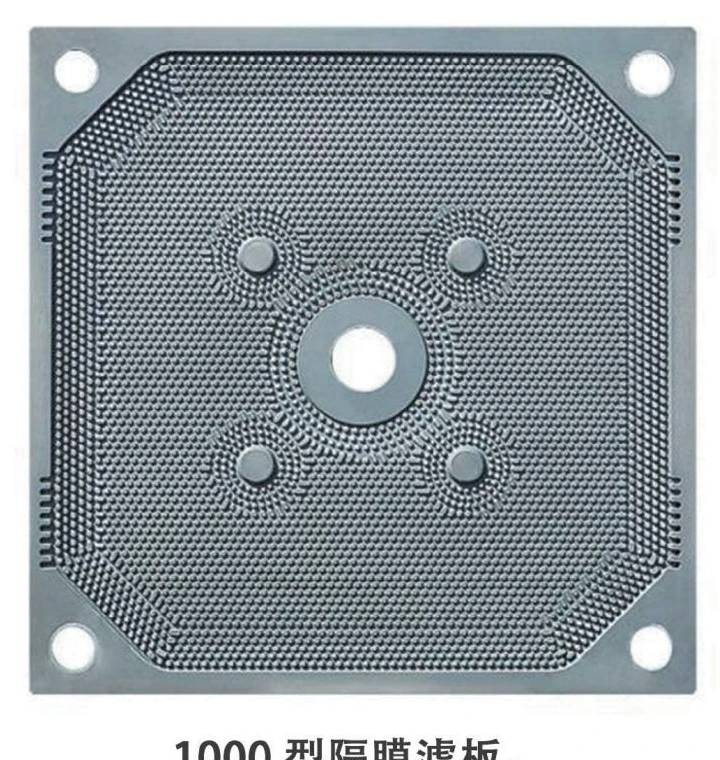
Choose this plate type when the process needs filtration followed by controlled mechanical squeezing. Filtration forms the cake and drains filtrate; a squeeze medium then acts through the membrane to reduce void liquid before discharge. The result depends on cake permeability, thickness, cloth condition, feed sequence and control logic, so a membrane plate is not a guaranteed moisture or capacity specification.
Membrane plates are a review option for mineral concentrates, tailings, stone wastewater and selected industrial slurries where a chamber cycle leaves too much retained liquid. They may be unsuitable when the press has no compatible squeeze connection or when dimensions and sealing do not match. Check a sample, drawing and operating information before ordering.
Automatic operation and membrane squeezing are not opposing choices. A press can automate plate shifting and sequencing while using membrane plates; the automation page concerns controls, while this page concerns plate structure and interfaces.
- Use when the press has a defined membrane-water or membrane-air connection and a control sequence that keeps filtration and squeezing distinct.
- Confirm that the existing plate pack, cloths, handles, pull-up arrangement and closing dimensions can accept the proposed plate.
- Do not infer final cake moisture, throughput, pressure or cycle time without slurry data and a suitable test or engineering review.
| Decision point | What to confirm before supply |
|---|---|
| Existing press | Manufacturer or model marking, plate size, number of plates, closing length and compatible membrane connections |
| Squeezing medium | Whether the process uses water or air, the available interface and the approved operating limits for the assembled system |
| Cake duty | Slurry solids, particle size, compressibility, target handling condition and whether cake washing is required |
| Replacement basis | Original plate, drawing or clear photos of both sides, handles, sealing edge and ports |
How the Membrane Stage Works
A typical sequence begins with the plate pack closed and the cloths correctly installed. Feed slurry enters the filter chambers; solids accumulate on the cloth while filtrate leaves through the internal channels. When the filtration step is complete, the feed and filtrate paths are isolated according to the press procedure. The membrane is then supplied through its dedicated interface so it can move against the cake. After the squeeze stage is completed and the membrane is safely relieved, the pack can open for cake discharge.
Set this sequence for the actual plate and press. Membrane squeezing is not feed pressure, and neither is hydraulic closing pressure. Washing cloths is different from washing the cake; each operation needs identified connections, checks and instructions.
| Step | Physical action | Selection or operating check |
|---|---|---|
| 1. Close and seal | Plate pack forms sealed chambers | Check plate thickness, sealing profile, handles and closing allowance |
| 2. Filter | Slurry enters; filtrate exits through channels | Confirm feed and filtrate port arrangement and cloth fit |
| 3. Isolate | Filtration is stopped or switched according to the process | Keep feed, filtrate and squeeze connections clearly identified |
| 4. Squeeze | Membrane acts on the formed cake | Confirm medium, interface, sequence and approved limits for the system |
| 5. Release and discharge | Squeeze medium is relieved before opening | Never open a press under pressure; follow the press safety procedure |
Construction, Interfaces and Materials
The plate body establishes the chamber, sealing edge, drainage paths and mechanical support. The flexible membrane acts on the cake; its attachment, clearance and interface must match the plate. Cloth supports, ports, handles and pull-up features affect fit. Match a replacement as an assembly, not by outside dimension alone.
The confirmed Shengqi plate range includes membrane-filter-plate examples within a broader digital plate series of 250–2000 mm, with 1000 mm and 1250 mm examples specifically confirmed. These examples do not establish that every size, press or membrane arrangement is available for every application. Material, sealing compound and membrane construction remain selection items requiring review of temperature, pH, solids, solvent exposure and cleaning practice.
- Provide front, rear and side photos, including handles, sealing edge, feed or filtrate ports and membrane connection.
- Identify plate length, width, thickness, chamber depth, port position and hole pattern from a drawing or careful measurement.
- State whether the request is an original replacement, a membrane conversion review or a new compatible plate set.
Selection and Confirmation Workflow
Send the press nameplate and complete photos before requesting a quotation. Add a drawing when available and identify measured, estimated or documented dimensions. An original plate or representative sample helps reveal sealing and port details.
Shengqi can compare the geometry, identify missing information and distinguish a direct replacement from a process change. The recommendation should consider the press, cloths, pump and slurry, not catalogue size alone.
| Information to send | Why it matters |
|---|---|
| Nameplate and model | Links the plate request to the actual press and closing arrangement |
| Plate dimensions and chamber depth | Checks fit, chamber geometry and available closing length |
| Port and membrane interface photos | Checks feed, filtrate, squeeze and drainage connections |
| Slurry and operating conditions | Guides material, cloth and membrane review; does not replace testing |
| Quantity and delivery context | Defines the quotation scope without assuming stock or a fixed lead time |
Maintenance, Inspection and Replacement
During a planned shutdown, inspect the sealing edge, membrane surface, cloth seating, ports and handles. Look for cuts, distortion, embedded solids, blocked channels or marks that could explain leakage or uneven squeezing. Check cloth centering and photograph defects before dismantling.
Only trained personnel should isolate the press and release all relevant pressure and energy before opening or servicing it. Do not open a press under pressure, perform live electrical work or bypass an interlock. Cleaning method and any chemical agent must be selected for the membrane, plate material, slurry residue and site safety rules; Shengqi does not provide a universal chemical recipe.
- Keep plate and cloth identification records so a leaking or damaged position can be traced.
- Replace a membrane or plate only after checking the mating plate, cloth, ports and control sequence.
- Request maintenance or replacement support when the defect affects sealing, pressure containment or the squeeze interface.
Frequently Asked Questions
Can membrane filter plates be installed in any filter press?
No. The plate dimensions, thickness, chamber depth, sealing edge, handles, cloths, closing length, port layout and squeeze connection must match the press. Send the nameplate, drawings and photos for confirmation.
Does a membrane plate guarantee a specific cake moisture or capacity?
No. Cake moisture and capacity depend on slurry properties, cake thickness, cloth, filtration cycle, squeeze sequence and test conditions. They must be confirmed for the actual duty rather than promised from plate size alone.
Is membrane squeezing the same as feed pressure?
No. Feed pressure drives slurry through the forming cake, while membrane squeezing acts on the formed cake in a separate stage. Hydraulic closing pressure is a third function. The press controls and connections must keep these duties distinct.
What should I send for a replacement quotation?
Send the equipment nameplate, front, rear and side plate photos, dimensions, chamber depth, port positions, membrane connection, quantity, material and slurry conditions. A drawing or original plate sample helps verify the match.