- 01Identify the press and current plate→
- 02Measure geometry and ports→
- 03Review material, cloth and slurry→
- 04Approve drawing or sample match→
- 05Confirm quantity and installation plan
This is a verification flow, not a default performance guarantee. Keep filtration, cake washing, cloth cleaning and any squeezing stage as separately confirmed operations.
When to Choose Recessed Filter Plates
Choose a recessed plate arrangement when the filter press is designed to build a chamber between two matching plate faces and the process needs a defined cake space for solid-liquid separation. The recessed profile supports the cloth and creates the space in which solids accumulate; it does not by itself determine filtration capacity, cake moisture or filtrate quality.
- Use the press nameplate, current plate photos and a measured sample as the starting evidence.
- Confirm whether the replacement is a chamber plate, a membrane plate, a CGR plate or another arrangement before ordering.
- Treat the plate, cloth, handles, port layout, closing system and feed piping as one matched assembly.
| Selection question | Why it matters |
|---|---|
| Existing press identity | Frame, closing arrangement and plate pack must accept the replacement. |
| Chamber depth and cake requirement | The recessed geometry affects the available chamber and cloth fit. |
| Slurry conditions | Solids, abrasiveness, temperature and pH guide material and cloth review. |
| Port and sealing layout | Mismatched feed, filtrate or sealing features can cause leakage or failed connection. |
| Reason for change | A dimensional replacement and a process improvement are different decisions requiring different evidence. |
How a Recessed Filter Plate Works
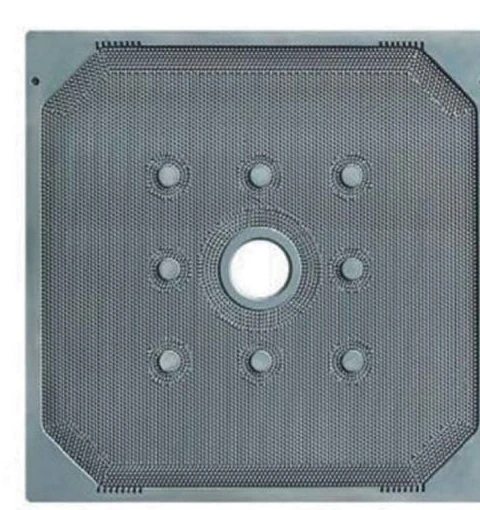
A recessed filter plate has a molded or machined recessed face, supporting drainage features and an outer sealing area. A filter cloth covers the working face. When two plates close, the paired recesses create the chamber. Slurry enters through the selected feed path, liquid passes through the cloth and drainage surface to the filtrate outlet, and retained solids form a cake in the chamber.
- Plate face → cloth support and drainage → chamber space → cake retention → filtrate outlet.
- A recessed plate can be paired with suitable cloth configurations, but the center hole, corner holes, necks and edges must match the press design.
- The plate pack must be opened only after the operating procedure confirms pressure is released and the equipment is in a safe state.
Confirmed Range and Configurations
The confirmed Shengqi reference range covers filter plate series from 250 mm to 2000 mm. The 1000 mm and 1250 mm examples are reference examples from the available material, not a claim that every press, chamber depth or port arrangement is available in every size. Final dimensions and material are confirmed against the customer’s press information, drawing or sample.
| Configuration item | Confirm before quotation |
|---|---|
| Series size | Nominal size and the actual measured outside dimensions. |
| Plate geometry | Recess depth, total thickness, sealing land and drainage face. |
| Port arrangement | Feed, filtrate, washing or squeezing ports, including position and diameter. |
| Material | Required material and compatibility with the slurry, temperature and cleaning practice. |
| Cloth interface | Center or corner feed, neck length, edge fixing, holes and attachment method. |
| Quantity | Complete pack count, spare quantity and whether matching cloths are required. |
Replacement Verification Process
A reliable replacement starts with identification rather than a generic size request. Send the equipment nameplate, clear front, back, side and handle photographs, and a photo showing the plate installed in the pack. Measure length, width, total thickness and recessed chamber depth. Record feed and outlet hole locations, sealing details, pull or carrying handles, squeeze connections and the plate material if known.
- 1. Photograph the nameplate and the complete plate from both faces and the side.
- 2. Measure the plate and chamber; mark every port from a fixed corner or centerline.
- 3. Record slurry, temperature, pH, solids description, cycle purpose and cleaning practice.
- 4. Send drawings or a physical sample when the plate has unusual edges, ports, handles or seals.
Installation, Inspection and Maintenance
Before installation, isolate the press according to the site procedure, release process pressure and prevent unexpected movement. Do not open a plate pack under pressure or perform electrical work while energized. Do not bypass guards or interlocks. Clean the sealing lands and inspect the frame, closing face, cloth support and adjacent plates before inserting the replacement.
Routine care includes removing adhering solids using a method compatible with the plate material, checking sealing edges and drainage surfaces, and storing spare plates supported and protected from deformation. Cleaning chemicals should not be selected from a universal recipe; material, slurry residue, temperature and the equipment supplier’s compatibility guidance must be confirmed first.
| Check | Action before return to service |
|---|---|
| Sealing edge | Look for cuts, deformation, embedded solids or uneven closure. |
| Drainage face | Remove buildup with an approved, material-compatible method; do not gouge channels. |
| Ports and necks | Check alignment, obstruction and cloth fit before closing the pack. |
| Handles and guides | Confirm clearance and secure engagement with the press opening system. |
| Cloth | Replace or refit cloth if it is folded, torn, stretched or incorrectly attached. |
Information to Send for a Recessed Plate Quote
For a useful review, send the press manufacturer and model if shown, nameplate image, number of plates, current plate size, chamber depth, total plate thickness, port sketch, material, cloth attachment, slurry description and the reason for replacement. Add operating temperature, pH, abrasive content, feed and cleaning details where known. If a value is unknown, mark it Not Sure rather than estimating.
- Request a drawing review when dimensions or port positions are uncertain.
- Include matching replacement cloth information when the current cloth is worn or causing a process issue.
- Use the measurement guide for a structured plate and cloth record before sending the inquiry.
Frequently Asked Questions
Are recessed filter plates interchangeable with membrane or CGR plates?
Not automatically. The plate face, chamber, sealing profile, ports, cloth attachment and press closing arrangement must be compared. Send the existing plate evidence before selecting an alternative arrangement.
Can a new recessed plate guarantee a particular cake moisture or capacity?
No. Plate geometry is one part of the result. Slurry properties, solids loading, cloth, cycle control, pressure stages and test conditions also affect filtration. Any target must be reviewed with application data or testing.
What should I photograph for a replacement inquiry?
Provide the equipment nameplate, the plate front, back, side and handles, the plate installed in the pack, all ports and a ruler or measured dimension reference. Include a drawing or sample when the shape is unusual.
Can Shengqi supply matching filter cloths?
Yes, matching cloths can be reviewed as a separate but connected selection. Send the plate geometry, center or corner feed arrangement, neck and edge details, original cloth sample or photos, slurry conditions and the intended improvement.