- 01Press nameplate and plate evidence→
- 02Dimensional and port review→
- 03Material and slurry confirmation→
- 04Approved plate and cloth match→
- 05Safe inspection and installation
This is a selection and replacement sequence. Filtration, washing, air, squeeze and cleaning steps are process-specific and must not be treated as one default cycle.
When to Choose CGR Filter Plates
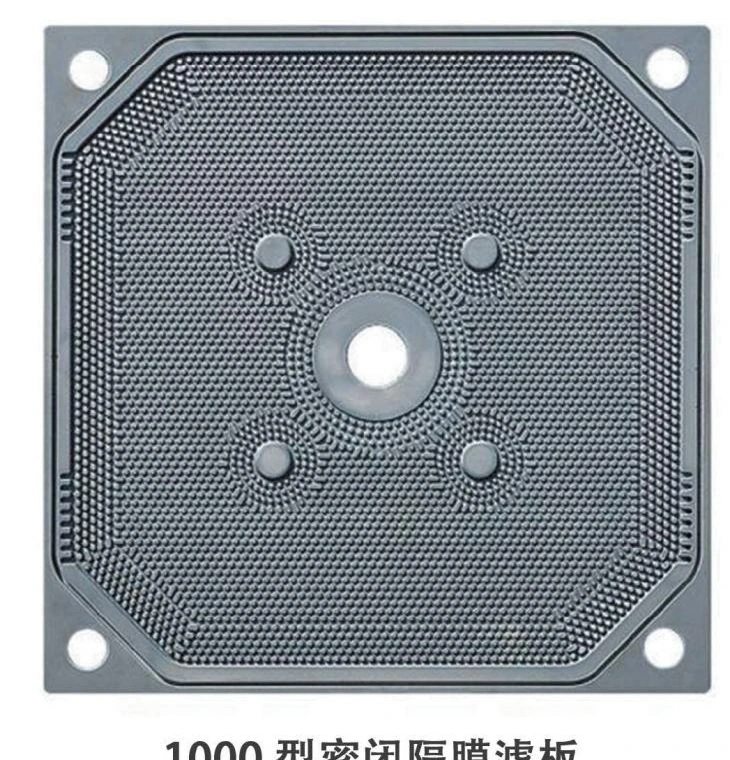
Choose a CGR plate when the existing press uses recessed chambers and the plate perimeter seals against its neighboring plate. The plate geometry creates the cake space while the filter cloth separates solids from filtrate. CGR is a replacement configuration, not a universal promise that one plate fits every chamber press.
A replacement is appropriate when the current plate has cracking, a damaged sealing land, worn handles, distorted ports, or a chamber arrangement that no longer matches the cloth pack. It is also useful when a documented drawing or intact sample is available for comparison. If the goal is to change cake release, washing, filtration behavior or chemical compatibility, the plate, cloth, slurry and cycle should be reviewed together rather than changing one dimension by assumption.
- Use the press nameplate and an existing plate to establish the starting geometry.
- Confirm whether the replacement is for an original-equivalent configuration or a defined design change.
- Keep filtration area, chamber volume, feed ports and filtrate paths as separate selection checks.
- Do not infer pressure, capacity, cake moisture, service life or delivery time without model and process confirmation.
| Decision point | What to confirm before quotation |
|---|---|
| Press identity | Nameplate, manufacturer mark, model and plate count |
| Plate geometry | Length, width, thickness, chamber depth, sealing land and handles |
| Flow paths | Feed opening, corner or side filtrate ports, and any air or squeeze connection |
| Process | Slurry solids, temperature, pH, expected cycle and contact-material requirements |
How to Identify the Correct CGR Plate
Start with photographs of the full plate, front and back faces, side profile, handles, sealing edge and every opening. Measure a clean plate without compressing the sealing surface. Record the plate length and width, overall thickness, chamber depth and the location and diameter of each opening. A sketch with reference edges is more useful than a single overall dimension.
Compare the sample with the plate pack: note whether the feed is central or offset, whether filtrate exits through corner ports or side channels, how the cloth is held, and whether the plate has a diaphragm, wash, air or squeeze connection. These details determine whether the requested part is a standard replacement, a modified plate or a new matched set.
- Photograph the nameplate before removing identifying marks from the equipment.
- Photograph the plate face, reverse face, side edge and handle orientation with a scale.
- Measure sealing land, chamber depth, holes and hole-to-edge distances.
- Send one intact plate or a dimensioned drawing whenever possible.
- State whether the cloth is fixed by buttons, clips, ties, a neck, or another arrangement.
Confirmed Size Reference and Material Review
The confirmed product reference covers digital filter plate series from 250 to 2000 mm, with 1000 mm and 1250 mm examples available for discussion. These examples are not a commitment that every size, thickness, port arrangement or chamber depth is available for every press. The final size and configuration must follow the existing equipment and the reviewed application.
Plate material is selected against temperature, pH, solids, cleaning practice and mechanical duty. The material discussion should identify the liquid-contact requirement and any compatibility concern; it should not substitute a generic chemical recipe. If the process or cleaning method is uncertain, provide a sample, current plate history and a request for compatibility review.
| Information supplied | Selection use |
|---|---|
| 250–2000 mm series reference | Initial conversation about dimensional range only |
| 1000 or 1250 mm example | Reference example to compare with the customer press, not a universal model claim |
| Temperature and pH | Material and sealing review |
| Slurry and cleaning conditions | Cloth, plate and maintenance compatibility discussion |
Replacement Review and Supply Process
A practical order starts with evidence, not a guessed plate code. Andy can review the submitted nameplate, images, measurements, drawings and sample condition. The review identifies missing dimensions and separates an original-equivalent replacement from a proposed performance change. A quotation should be issued only after the matching points, quantity and material basis are clear.
Before installation, compare the delivered plate with the approved drawing or sample record. Check the sealing land, port alignment, handle position, chamber depth and cloth fit as a set. Installation must follow the press manufacturer's safe procedure: isolate the machine, release stored pressure and confirm that the plate pack is safe to handle. Never open a press under pressure, perform electrical work while energized, or bypass an interlock.
- Submit details → receive a dimensional and application review → clarify gaps.
- Approve the matched drawing, material and quantity → confirm the supply scope.
- Inspect received plates → dry-fit and check the pack and cloth alignment safely.
- Record the installed configuration and monitor leakage, port flow and cake release during normal operation.
CGR Plate Selection Checklist
Use this checklist when preparing an enquiry. If a field is not known, mark it as Not Sure rather than estimating. A complete photo set and one reliable measurement can prevent an otherwise avoidable mismatch; process data then determines whether the chosen geometry is suitable for the intended duty.
| Field | Required entry |
|---|---|
| Customer and press | Company, country, press maker, model and nameplate image |
| Plate dimensions | Length, width, thickness and chamber depth in stated units |
| Openings | Feed, filtrate, wash, air or squeeze ports with positions and diameters |
| Pack details | Quantity, handle style, sealing profile and plate sequence |
| Material duty | Slurry, solids, temperature, pH and cleaning conditions |
| Evidence | Front, back, side and detail photographs, drawing or sample availability |
Frequently Asked Questions
Are CGR filter plates interchangeable with any recessed-chamber press?
No. The external dimensions, chamber depth, sealing profile, ports, handles and cloth arrangement must match the specific press and plate pack. Send the nameplate and plate evidence for review.
What CGR plate sizes can you discuss?
The confirmed digital filter plate series reference is 250–2000 mm, with 1000 mm and 1250 mm examples. These are reference points, not a promise that every configuration fits every machine.
Can you supply only plates without cloths?
A plate-only scope can be reviewed. The cloth installation and sealing arrangement still need to be checked because an apparently correct plate can fail to seal or filter if the cloth pattern is wrong.
What should I send for a replacement enquiry?
Send the press nameplate, front and rear plate photos, side and handle photos, dimensions, port details, quantity, material conditions and any drawing or intact sample. Mark unknown data as Not Sure.
How do you select plate material?
Material review uses the slurry, temperature, pH, solids, cleaning practice and mechanical duty. Compatibility must be confirmed for the actual process; no generic cleaning chemical formula is assumed.